How to Buy Commercial Indoor Playground Equipment for Your Business
Do you want to open an empty store or a family entertainment center? You can ask how to buy commercial indoor playground for sale. You need to plan this purchase well. Industry figures show it will take four years and three months for small centres to recoup their costs. Larger centres take an average of three years and nine months.
Security certifications such as ASTM, EN and CSA help keep customers safe and protect your business. Your return on investment depends on your design, your ability to run a business, and how many customers you can reach. This guide includes how to buy equipment, plan your budget and maintain your playground.
Key Takeaways
- Look for safety certifications such as ASTM and EN1176. They keep your kids safe, they protect your business.
- Set a budget that works for you. Add up the cost of equipment, flooring, transportation and installation. Plan a return on investment of 18-36 months.
- Choose sturdy materials such as galvanized steel and high-density plastics. They can handle a lot of usage and take longer, so you can save on repairs and replacements.
- Design your own space for different age groups. Soft play equipment for toddlers and climbing structures for older kids. This gives children of all ages a space to play.
- Planning for future. Select modular devices that can be added later. This allows you to expand your horizons as your business grows.
Understanding Commercial Indoor Playground Equipment
Defining the Core Components
Commercial indoor playground equipment include slides, trampolines, soft play modules, climbing structures and ball pits. These parts work together to give kids a full play experience. Each component has to deal with the daily use of many kids. Manufacturers use sturdy materials to protect against wear and tear.
Safety is important in every design choice. ASTMF1918 standards cover risks such as entrapment. It helps keep a child’s head, fingers or clothes from getting caught in nets or cracks. EN 1176 covers playground safety, including drop height and impact zones. The floor protection required depends on the equipment and the height at which it falls. Independent labs like TÜV Rheinland and SGS can check that the equipment is up to scratch. Always ask for certification documents before purchasing a commercial ride.
Vasia playground offers a number of options that meet safety standards. Indoor rides for sale include slides, trampolines and soft play modules. Check product certificates to make sure each project meets your project standards.
How It Differs from Residential Playsets
Home Residential playsets in the backyard. Commercial playgrounds receive many visitors each week. This changes the way they are built and maintained.
commercial indoor playground equipment must meet safety requirements for public use. It faces more traffic, more wear and tear and more risk. Manufacturers use thicker plastic, steel and fire-resistant materials. Residential equipment usually uses lighter materials and can be unsustainable in heavy use.
certification process is also different. Voluntary guidelines can be followed for residential equipment. Commercial equipment must comply with the rules applicable to its market and product type. You should check that your indoor recreation equipment supplier has provided the correct documentation. Indoor playground equipment manufacturer should provide relevant certificates and equipment testing reports.
Life expectancy also varies. A residential playset can last up to 10 years. Commercial indoor rides must be used daily over years. Durable equipment can help reduce maintenance and replacement costs. When searching for indoor rides, choose a commercial-grade product that suits your needs. At first, they may be more expensive, but over time they can provide better value.
Types of Indoor Playground Equipment
Soft Play Modules and Climbing Structures
Soft play modules are the foundation of many indoor play facilities. These foam pieces have bright vinyl covers and are easy to clean. They include climbing ladders, ball pits, stepping stones and padded slides for toddlers and toddlers. Soft surfaces help reduce the impact of waterfalls. It’s a good option for under-fives who are still learning to move house.
Climbing structure is for older kids who want more physical challenges. They include rope netting, cargo nets, tube slides and multi-storey buildings. You can choose from small units with tight spaces or large set up family centers. When you look for commercial indoor rides, you’ll find climbing structures with sturdy steel frames and durable ropes. These materials are used for many years of daily use.
Soft play and climbing equipment combine to give kids more ways to play. Younger children can use cushioned areas, while older ones can try more challenging climbs. This combination allows families to enjoy more activities on each trip. Vasia Playground offers two devices with modular components, so you can change layouts as your business grows.
Interactive and Themed Play Areas
Interactive play area to make play more active and fun. Modern designs include LED touch walls that change colors and patterns, music speakers and textured surfaces. These traits capture children’s attention and encourage them to explore, solve problems, and play with others.
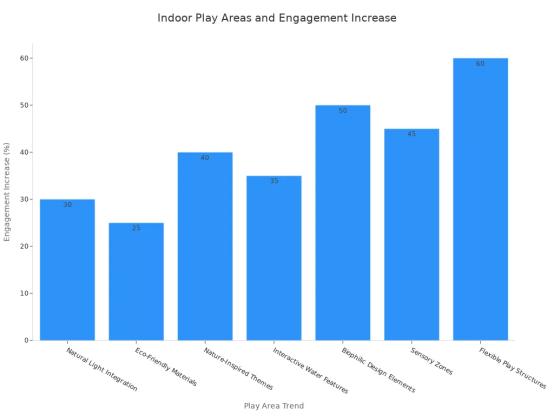
Themed play areas create a whole new world for children. You can choose from jungle adventures, space trips or modern city scenes. A 2023 report by the International Association of Amusement Parks and Attractions (IAAPA) found that more than 60% of children participate in storytelling spaces. These areas help children develop creativity and social skills as they act different roles.
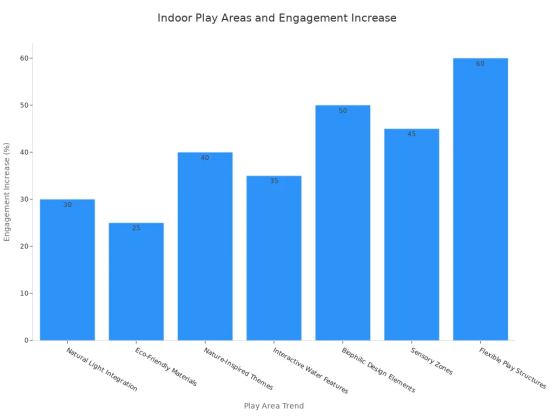
The chart above shows how different ways of playing can increase engagement. Flexible play structures lead to a 60% boost, while natural themes led to a 40% boost. By encouraging children to explore and learn, Sensory zones were 45% more engaged. The data shows how commercial indoor rides can help visitors stay longer and bring them back.
Vasia Playground offers custom themes to match your brand. Its design team can help you create a unique space. You can choose a small soft play area for a restaurant or a full indoor play area for a mall. You can tailor the design to your needs and budget.
When looking for indoor rides to sell, consider the age of your target customer. Toddlers love feeling boards and soft sounds. Older children prefer obstacle courses and ninja-style challenges. The combination of these features provides more ways for kids of all ages to play.
Budgeting for Your Investment
Breaking Down the Cost Factors
Budget for commercial indoor rides means knowing all the costs. A lot of buyers only look at device prices. This can lead to unexpected costs. Before making a decision, you need to understand the full cost.
Equipment is a big part of your budget. Small soft play areas start at around $10,000. Large multistage systems can cost more than $100,000. For a standard 5,000-square-foot facility, equipment and other major items, the cost typically ranges from $150,000 to $300,000. The final cost depends on design and local labour prices.
Your overall budget also depends on the size of your facility. A space of 2,000 to 5,000 square feet can cost $$150,000 – $400,000. A larger 5,000–10,000-square-foot venue may cost $$300,000 – $700,000. Medium-sized facilities with multiple attractions planned to cost $200,000-$400,000.
The main costs of the project fall into the following categories:
- Pleasure rides themselves: 30–50%
- Safe flooring and paving: 10–15%
- Shipping and professional installation: 15–20%
- Upgrading of facilities such as HVAC and lighting: 20–25%
You should also know the difference between a device specific quote and a turnkey projects. Equipment quotes only may exclude shipping, customs duties, destination handling, site preparation, electrical and HVAC upgrades, fire safety systems, local permits, insurance or installation labor. These costs are shown separately unless the supplier confirms in writing that they are included.
Different types of equipment have different prices. Soft play equipment for young children costs $20,000 to $50,000. Trampoline park equipment costs $50,000 to $150,000. Custom themes are more expensive because they require additional design work, custom parts and prototype approval.
Material choices also affects costs. Soft play materials cost $30-$80 per square foot. Structural framings cost $5-$12 a pound. Interactive features increase by $500-$5,000 per unit.
Calculating Your Return on Investment
It is important to understand the commercial costs of indoor rides. Knowing your payback period is more important. Real-world data show that different types of playgrounds have different payback periods.
| Playground Type | Reported Payback Period |
| Entry-Level Soft Indoor Playground | 24–36 months |
| Mid-Scale Commercial Indoor Playground | 18–30 months |
| High-Performance Adventure/Hybrid Playground | 18–24 months |
The data comes from long-term operating data from shopping malls and family entertainment centers. 12 – 18 months payback periods may sound common, but they can actually be 36 months or more. Higher than anticipated maintenance, staff costs and visitor numbers may have contributed to the variance.
Your indoor playground business plan should include realistic payback times. To estimate payback period, divide your total investment by your expected monthly profit. For example, if you invest $200,000 and earn $8,000 a month, you can recoup your investment in 25 months. Such calculations can help you set realistic goals.
When looking for indoor rides to sell, remember that quality affects your ROI. Durable commercial playground equipment last longer and require less maintenance. Vasia Playground uses high-quality, non-toxic materials designed for everyday commercial use. Lower prices seem attractive, but cheaper devices are more likely to break down. The cost of repairs and replacements may offset your initial savings.
Opening an indoor playground takes time and patience. Commercial rides are often your biggest upfront cost. A well-designed indoor playground will entice families to stay longer and encourage repeat visits. These factors help to increase incomes.
Vasia’s modular designs allows you to add new features as your business grows. You can expand your playground without replacing the existing structure. This flexibility will help protect your investment and extend the life of your device.
Key Considerations When Purchasing Commercial Indoor Play Equipment
Navigating Safety Standards and Certifications
Security certification ensures the safety of your business and young visitors. You must verify each claim before you sign the contract. The following table shows the main factors that need to be reviewed.
| Evaluation Factor | Key Requirements | Supporting Details |
| Safety Certifications | ASTM F1918, ASTM F1292, CPSC compliance | Needed for liability protection and insurance; ask for paper documents and independent lab testing; IPEMA certification or similar is very important. |
| Space Constraints | Vertical clearance, load-bearing capacity, traffic flow | Check ceiling items (HVAC, sprinklers), ADA paths, and fall zones; use vertical space to add more play areas. |
| Target Age Group | Toddler vs. school-age structural design | Toddler areas need thick foam and floor padding; school-age zones need steel frames and strong netting for heavy use. |
- Ask your supplier for specific documents. Use this list to check your device is compliant:
- Provide structural safety certificates for your market, such as EN 1176, ASTM standards, or local rules. These should come from approved independent testing labs, not just from the factory itself.
- Material safety reports covering hazardous substances, RoHS requirements, toy safety rules and fire resistance. Require reports that match the materials used in your equipment and related production batches.
- Quality management certificate indicates that the factory follows a consistent production process rather than a one-time spot check.
You should also ask independent labs to report fire resistance, material safety (including phthalates and heavy metals), and impact protection for safety flooring. Check the scope and date of each certificate. Make sure testing lab is qualified and the documentation is consistent with the product you plan to purchase. Compare supplier statements with public safety guidelines the CPSC Playground Safety guidelines) and related standards (e.g. EN 1176 and ISO 8124).
Always ask your supplier for formal test reports and certificates. The logo on the brochure means you should check the document, not just trust the logo.
Ask for the name of the distribution team, report number, model number involved, standard version and any restrictions. Ask what documents you need, what language they must use, and when they must be sent. If testing, engineering review, translation or external inspection are not included in the offer, please consult for additional costs and time prior to placing your order.
Vasia Playground states that its products follow ASTM, CPSC and local rules. Check the test reports and certificates of the commercial indoor playground equipment you plan to buy to make sure they meet your marketing rules.
Space Planning and Layout Optimization
Space influences the choice of equipment. First measure the height of the ceiling. Many multistory play towers require a clearance of at least 12 feet. Check HVAC ducts, sprinklers and light fixtures as they reduce the amount of space you can use.
The required safe floor depth depends on the equipment’s fall height. Plan your flooring with this table:
| Surfacing Type | Surfacing Type |
| Depth/Thickness and Example Fall Heights | Depth/Thickness and Example Fall Heights |
| Engineered Wood Fiber (EWF) | Engineered Wood Fiber (EWF) |
| Minimum 9 in, maintained. Maximum fall height depends on the ASTM F1292 test rating. | Minimum 9 in, maintained. Maximum fall height depends on the ASTM F1292 test rating. |
| Rubber Mulch | Rubber Mulch |
| 4 in → 9 ft; 5 in → 11 ft; 6 in → 13 ft | 4 in → 9 ft; 5 in → 11 ft; 6 in → 13 ft |
| Bonded Rubber Mulch | Bonded Rubber Mulch |
| 2 in → 4 ft; 2.5 in → 5 ft; 3 in → 6 ft; 3.75 in → 8 ft; 4.5 in → 10 ft | 2 in → 4 ft; 2.5 in → 5 ft; 3 in → 6 ft; 3.75 in → 8 ft; 4.5 in → 10 ft |
| Rubber Tiles (over compacted stone) | Rubber Tiles (over compacted stone) |
Good traffic flow ensures indoor playgrounds are safe and fun. Set up entrances and exits to prevent visitors from getting directly into busy gaming areas. Clear roads help people move around and control crowds during busy times. Keep the walkway open and separate play area from the walkway. Slides and climbing structures should not block narrow sidewalks.
Waiting areas were set up near the entrance and banquet hall to prevent visitors from blocking the walkway. Keep busy play areas separate from quiet areas and leave plenty of space between devices to prevent crowding. Plan emergency exits and escape routes from the start. Maintain the required safety gaps and clear sightlines so that staff can observe the activities of children and visitors.
Vasia offers custom layouts for different spaces. Its design team will measure your facilities and create a plan to make the most of the available space. You can choose between a small setup restaurant or a large family entertainment center. The team adjusts the layout to your needs to help your commercial rides work in space.
Evaluating Durability and Material Quality
Choosing the Right Materials for High Traffic
Your commercial indoor rides are heavily used. There are lots of kids climbing up and down it every day, jumping up and down. This means you need sturdy material. Household parts are not made for this level of use. They can quickly crack, posing a safety risks.
Look for equipment hot-dip galvanized steel frames. This coating helps prevent rust and corrosion. High density polyethylene (HDPE) panels are resistant to cracking and fading. These materials can withstand many years of use. Ocean-grade ropes and nontoxic vinyl covers add protection. Each piece should stand up to cleaning, moisturising and everyday use of the product.
Vasia Playground uses commercial-grade materials in its indoor rides. The company states its products use durable, non-toxic components that meet international safety standards. Check product details and test reports to make sure the materials meet your needs. Solid materials can reduce maintenance and help keep your playground safe for visitors.
Understanding Warranty and Lifespan
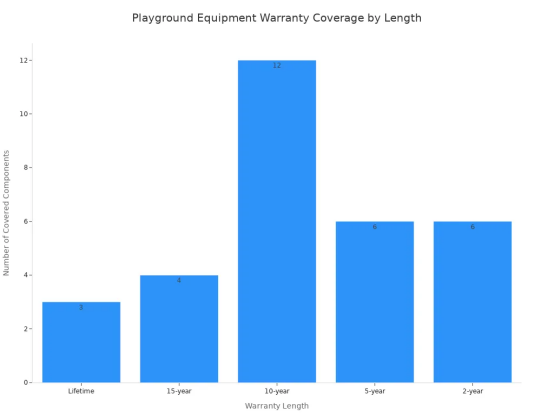
Warranty coverage lets you know how long your commercial indoor rides will last. Different parts may have different warranties. The following table shows typical warranties offered by major manufacturers.
| Warranty Length | Covered Components |
| Lifetime | Hot-dip galvanized parts; stainless steel parts; circular HDPE parts |
| 15-year | Robinia wood parts; oak wood parts; high-pressure laminate parts; aluminum parts |
| 10-year | TexMade posts; painted metal surfaces; stainless steel slides; molded PP decks; rope and net constructions |
| 5-year | Resin-coated plywood parts; springs and ball bearing assemblies; concrete parts |
| 2-year | Moveable plastic and metal parts; rubber membranes; screens and electronic parts |
These warranties include material defects and manufacturing errors. They do not include normal wear and tear, vandalism or inadvertent damage. You must follow the manufacturer’s maintenance instructions to keep the warranty valid. Keep a record of all cleaning and inspections in case you need to make a warranty claim.
Vasia’s products are designed for long-term use and easy maintenance. Their modular components make maintenance easier and cheaper. You can replace damaged parts instead of the entire structure. This will extend the life of the device and protect your investment.
When you compare the price of rides, check the warranty and expected service life. Initially more expensive equipment can save money by reducing replacement and maintenance costs.
Matching Equipment to Your Indoor Playground Business
Each type of business has different needs when choosing commercial indoor rides. daycare center require different equipment than shopping mall. Your business model, available space and target customers can help you choose the right indoor rides.
Solutions for Family Entertainment Centers
A home entertainment center needs all sorts of equipment. They serve many ages, from toddlers to teens. Our goal is to keep everyone entertained for a few hours. Multi-level climbing structures, trampoline areas and ninja classes are all good options. These attractions will excite visitors and encourage them to stay longer.
Your layout should guide visitors through different play areas. Set up soft play areas near the entrance for younger children. Placing more challenging equipment further inside. The layout encourages families to move and explore. You’ll also need a party room and seating area near popular attractions. Parents want to look after their children while enjoying food and drink.
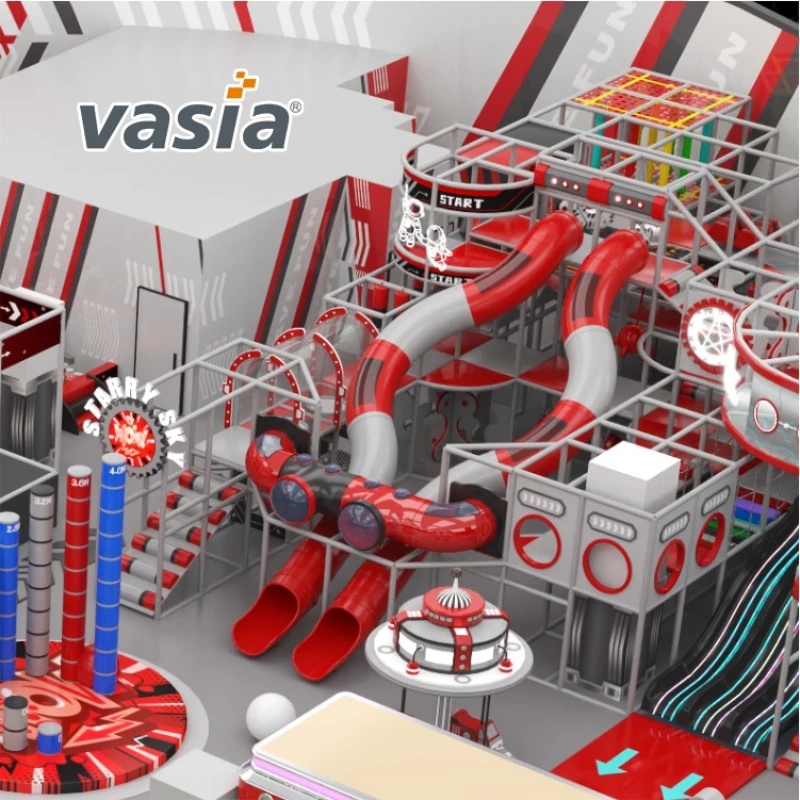
Vasia Playground offers complete FEC solutions. Its commercial indoor playgrounds include slides, rope courses and interactive gaming features. You can choose themes that match your brand. Jungle themed or space adventure can create an unforgettable experience and help your venue stand out from competitors.
Adapting for Schools, Restaurants, and Retail
Schools and daycare centers need equipment to support learning and play. Sensory panels, balance beams and group play structures help children develop new skills. Teachers must be able to observe children easily. (3) Open layout, clear vision and easy supervision. Equipment must also be sturdy and durable because children use it every day.
Restaurants and retail outlets often have limited space. They need compact equipment for small areas. The following table shows the applicable equipment at these sites:
| Venue Type | Recommended Equipment | Design Priority |
| Restaurant / café | Toddler soft play, wall panels, mini slide | Keep children close to parent seating |
| Retail store | Wall-mounted games, compact climbing feature | Attract families without blocking shopping flow |
The “play loop” concept works well in small spaces. Connect the exit of one attraction to the entrance of the next. For example, place a foam staircase at the bottom of a spiral slide. This shifts children from one activity to another. Mix active areas with quieter areas, such as sensory boards or pitches. This can encourage families to stay longer without needing more floor space. Use vertical equipment, such as spiral slides, to provide more playback options in tight areas.
Vasia customizes devices for different types of businesses. Its indoor rides meet your brand and everyday needs. Whether you’re opening a school, restaurant or retail store, you can find a solution that works for your space and budget. Opening an indoor playground requires careful planning, but choosing the right provider can make the process easier. Your Indoor Playground business plan should cover your site-specific needs.
Planning for Maintenance and Longevity
Your commercial indoor playground equipment is a major investment. A good maintenance plan helps protect it and keeps children safe. Without regular care, even well-built equipment can wear out quickly. You need a schedule for daily, weekly, monthly, and quarterly tasks. Regular checks help you find small problems early and avoid costly repairs.
Establishing a Cleaning and Inspection Routine
You should have a clear schedule for your maintenance and cleaning. Daily inspections focus on visible safety issues and cleanliness. Weekly inspections cover hard-to-reach areas. Monthly and quarterly inspections help identify structural problems before they become dangerous. The following table shows a simple maintenance routine.
| Frequency | Task | Health and Safety Purpose |
| Daily | Visually inspect soft play structures, netting, and connectors | Helps prevent entrapment and structural failures |
| Daily | Clean high-touch surfaces, such as handrails, climbing grips, and entry mats | Reduces the spread of germs through contact |
| Daily | Check foam floor mats for tears, gaps, or worn areas | Helps maintain impact protection and reduce fall injuries |
| Daily | Check ball pits for visible dirt, debris, and contamination | Helps prevent hygiene issues and choking hazards from food or other debris |
| Weekly | Deep clean climbing structures, slides, and tunnels | Removes dirt, buildup, and odors |
| Weekly | Check fasteners and connectors across the play structure | Helps keep the structure secure during use |
| Weekly | Clean and sanitize the ball pit, including the balls and pit base | Helps reduce the spread of germs between users |
| Weekly | Check HVAC and ventilation filters in the play area | Helps maintain air quality and control odors |
| Monthly | Inspect the structural frame, including welds, anchors, and load-bearing points | Helps identify damage that could lead to structural failure |
| Monthly | Check worn parts and plan replacements | Helps prevent worn materials from becoming safety hazards |
| Quarterly | Review fire safety measures, including exits, signs, and access to fire protection equipment | Helps maintain fire safety and meet applicable code requirements |
| Quarterly | Check the load-bearing condition of elevated climbing structures | Helps identify wear that may affect structural strength |
| Quarterly | Review maintenance records and compliance reports | Keeps records ready for safety audits and health inspections |
This chart shows how often you should complete a task. Routine checks are important because they help keep visitors safe. Weekly and monthly checks provide additional protection. Quarterly reviews help prepare your records for inspection. Following this schedule can reduce safety risks and help your device last longer.
Planning for Future Upgrades and Expansion
Your indoor playground should grow as your business grows. Modular designs makes it easier to add new features without destroying existing structures. This will save money and reduce downtime.
Work with a reliable supplier of indoor playgrounds to provide you with modular systems. You can more easily replace, upgrade, and maintain individual parts.
Planning future expansion from the start. When buying your first kit, follow these steps:
- Discuss future expansion plans, connections, and reservations with suppliers during the planning phase.
- The first phase will be designed as a complete gaming area to support future additions.
- Before you approve the first design, check that the layout allows for extensions or upgrades.
- Plans are in place for possible future additions, such as separate play zones for different age groups, more seating, wall panels, storage space or larger play modules.
A phased approach can help you manage your budget for commercial rides. You can spread the cost over several years without having to pay everything upfront..
| Phase | Focus | Example Direction |
| Phase 1 | Core play value | Soft play, small slide, wall panels, basic flooring |
| Phase 2 | Age zoning | Toddler zone, young children zone, supervision improvements |
| Phase 3 | Program support | Storage, parent seating, event-friendly features |
| Phase 4 | Theming and upgrades | Decorative elements, larger play structure, interactive features |
Vasia’s modular components make it easier to expand your playground as the business grows. You can add new features without replacing existing structures. This will help protect your investment and extend the life of your equipment. Careful budgeting can help your indoor playground grow in the future..
The Benefits of Investing in Play Equipment
Driving Foot Traffic and Customer Retention
A well-designed play area can turn your space into a place families want to visit. Parents look for safe places where their children can play and use their energy. When you offer these services, your family can choose your location over other options. The International Association of Amusement Parks and Attractions (IAAPA) attendance rate attendance was 30% higher family entertainment centers centres with indoor playgrounds than at those without. This means more families will visit your venue.
More visitors, the more return visits. The kids might ask to go to the amusement park again, so the family will come back. Birthday parties, weekend trips and after-school outings can also bring families home. Your commercial indoor rides can be a great reason for families to visit throughout the year.
The benefits go beyond registration fees. Longer visits can lead to more food sales, merchandise sales and party bookings. Even a small playground can be a popular spot for families. This can help your indoor playground business attract customers during slow periods.
Enhancing the Customer Experience
Pleasure devices do more than keep kids busy. It can change the way your family sees your business. Parents can relax when their children are having fun. They may spend more time looking around, eating and chatting than they feel in a hurry. This gives them more time to enjoy what your venue has to offer.
The idea is simple: Happy children help parents relax. This can lead to longer visits rather than a quick exit. Businesses with indoor playgrounds are likely to see higher customer satisfaction, better online reviews and more suggestions from families. Even if revenue does not increase immediately, repeat visits may increase after you add a play area.
Vasia’s designs to encourage physical activity, imagination and social skills. Children climb, glide and explore while building coordination and confidence. Parents can sit nearby and watch their children play. A good experience helps build customer loyalty.
Investing in commercial rides can improve the customer experience. Happy families may share photos, leave positive comments and invite friends. These tips can help more people discover your business and connect more closely with the local community.
Current Design Trends in Indoor Play
Incorporating Technology and Interactive Elements
Modern indoor stadiums combine physical activity with numbers plays. When children touch the LED touch screen, it changes the colour and design of the walls. Music played over the speakers as children passed. These traits encourage children to explore and engage in play.
Sensory play features is also becoming more popular. Textured panels, fibre-optic lights and soft vibration surfaces allow children to use different sensations. These functions can cater to children with different learning needs and preferences. Kids who don’t like to shout may prefer a quiet tactile playground. Another child may prefer bright visual displays.
Engagement data shows the potential benefits of this approach. Flexible play structures can increase engagement by 60%, while sensory areas can increase participation by 45%. These figures highlight the value of interactive features. When choosing commercial indoor rides, consider which features are best for your target age group.
Designing for Inclusivity and Accessibility
Inclusive design means more than meeting basic accessibility rules. Universal design gives every child a fair chance to play. The aim is to remove physical and social barriers so that children, parents and carers can enjoy play areas together.
Accessible features includes rubber floorings and wide ramps connecting different entrances to the main playground. Adaptive swings and slides with transfer benches help children using mobility devices engage in play. Sensory zones with music features offer different gaming experiences. A “cozy dome” gives kids a quiet place to rest when they’re overwhelmed.
The path of the device is as important as the device itself. A walkway should connect the building or parking lot to the edge of the play area. Another accessible path should be to connect the edge to the device using a suitable surface. Once in play areas, children should be able to access devices by moving them around at transfer station or using ramps.
Inclusive equipment options include the Inclusive Whirl, Sensory Wave Climber and Rox-All-See-Saw. These designs make it easier for children to get in and out of cars or transfer from mobility devices. They can provide greater access than standard equipment while meeting applicable safety requirements.
Vasia Playground offers inclusive equipment options for children with different needs. It is designed to be accessible and safe. When planning your indoor playground, choose features that welcome all visitors. This will help attract more families and create a stronger connection with your community.
Choosing Equipment for Different Age Groups
Age-appropriate devices can help children enjoy your play area. Toddlers may struggle with rope walls designed for 10-year-olds. Pre-pubescent children may soon lose interest in ball pit made for babies. Choosing age-appropriate devices helps keep kids engaged and safe.
Designing for Toddlers and Young Children
Children between the ages of one and three know the world through their own senses. They need a soft surface to cushion their fall. Because their muscles are still developing, they need some kind of low-intensity structure so they can work out on their own. The right equipment can help them build motor skills, understand space and develop thinking skills through plays.
| Category | Criteria |
| Safety | Adherence to ASTM F1487 (U.S.) and EN 1176 (EU) standards; non-toxic materials; stable structures; small gaps to prevent entrapment; eco-friendly, fire-resistant materials; anti-slip surfaces; rounded edges |
| Developmental | Encourages motor skills, physical activity, spatial awareness, and cognitive skills through soft play structures (foam-padded slides, tunnels, ball pits) and educational play systems |
Look for foam padded slides, climbing holes, and pitches with gentle slopes. These features can help young children practice balance and coordination. Playback panels with shapes, colors and textures can also help them learn. Make sure every piece of equipment complies with safety standards before purchasing.
Vasia-designed playareas for young children take these needs into account. Its soft playback module uses non-toxic, fire-resistant materials and rounded edges. This will help create a safer gaming environment for your youngest visitors.
Engaging Older Kids and Preteens
Kids between the ages of six and 12 like to challenge their bodies and play with friends. They want equipment that tests their strength, agility and problem-solving abilities. Climbing structures, rope courses and ninja obstacle courses are good choices for this age group.
These playgrounds can include multi-storey towers with slides, cargo nets and drawbridges. Older kids might enjoy to race on obstacle courses or time it on Ninja Runway. Devices must be powerful enough to handle active plays and heavier users. Steel frames and sea ropes provide the strength and durability required for these activities.
You should also consider how older children play together. Create open spaces for groups to participate. Added features that encourage friendly competition, such as side climbing walls or dual slides. These options keep preschoolers interested and encourage repeat visits.
Vasia provides gaming equipment for different age groups. Its commercial indoor rides include ninja classes and rope challenges for older children. You can create a play area in one place for toddlers. This gives families more options to help you get more value from your investment.
Buying commercial indoor rides requires careful planning. You need to consider safety standards, materials, available space and the age group you want to serve. Each choice will affect the long-term success of your indoor playground business.
Working with a reliable provider like Vasia can make the process easier. Its teams can help with design, manufacturing and installation, as well as ongoing support. Expert guidance can help you manage every step of building an indoor playground.
Contact Vasia to discuss your project and customize the layout according to your space and budget requirements. A well-planned play area can attract families, encourage repeat visits and help build customer loyalty.
FAQ
What kind of safety certifications should I look for?
Look for ASTM F1918 soft play equipment and EN 1176 play equipment. Third-party test reports are required from organizations such as TÜV Rheinland or SGS. Check that each certificate contains the exact type of device you plan to purchase. Vasia provides international standard documents, including CSA, AS and NZS.
How much are commercial indoor rides?
Soft play systems for young children cost around $20,000 to $50,000. Trampoline parks start at about $50,000 and can cost more. A full 5,000-square-foot facility may cost $$150,000 – $300,000. Extra funds are set aside for transport, installation, flooring and building upgrades. Ask for a full quote to understand all costs before you buy.
How long will it take to install?
Most installations take two to four weeks. Large multi-storey structures can take up to six weeks. The supplier should explain what tasks are included, from site preparation to the final safety inspection. Vasia’s team can help you manage installation so you can prepare your staff and plan your opening.
Can I expand my playground later?
Yes. ‘ Modular designs makes it easier to expand your playground. Choose devices with connectors to add in future and leave plenty of room in the first layout. Vasia offers modular components that add slides, climbing features, or interactive panels without replacing existing structures. This can spread the cost over several years.
What maintenance is required for the equipment?
Daily tasks include visual inspection and cleaning of frequently touched surfaces. Weekly tasks include checking fasteners and deep cleaning equipment. Check the main frame and wear parts monthly. Quarterly inspection of fire safety measures and load-bearing structures. Following this schedule helps to ensure the safety and longevity of the equipment.