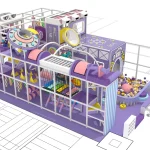
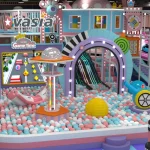
What Are Indoor Playground Systems and How Do They Work
An indoor play system is a complete play area in an indoor space. It includes a powerful frame, layered and fun gaming features. It has four main components: structure, playful features, design and adult supervision. Every step helps keep children safe and gives them a good place to play.
Well-planned indoor playground with clear sightlines and easy roads. It gives kids room to climb, slide and play with their imagination. Parents and carers can look after children and help if necessary.
Key Takeaways
- Indoor playground systems has four main components: a strong frame, fun to play with, good design and adult supervision.
- Safety features, such as padded floors, railings and rounded edges, help protect children from playing.
- Indoor playgrounds offer activities such as slides, tunnels, trampolines and ball pits for children of all ages and energy levels.
- Good design keeps the road clear and the view clear, allowing parents to easily observe their children.
- Adults need to pay attention to their children when playing, as falls can occur. Close supervision helps reduce the risk of injury..
Indoor Playground Systems: The Basic Structure
An indoor playground systems is a commercial play area built for indoor space. They usually have several levels, so children can climb, move, and climb down. Such a design would allow more gaming to take place in small spaces.
Frames and Multi-Level Layouts
This frame supports the whole structure. Builders often use plastic, wood, metal or a mixture of these materials. The main frame is usually made of Galvanized metal, with sturdy plastic parts and soft cushions. There are two common styles of framing:
| Frame System | Post Material | Post Diameter |
| Dura Frame | Metal (post systems) | 3 1/2 inches |
| NEC System | Natural wood | 4 1/3 inches |
Solid frames support platforms, tunnels and slides on different levels. Children can climb up one way and come down the other, so they can move more easily. The structure remains stable in daily use and is important for busy indoor commercial playgrounds.
Built-In Safety Features
Good design keeps kids safe on all levels. Padded floors and soften the waterfall with shock absorbent surfaces. Railings are attached to metal frames, with clear entrances and exits to help children find their way. Rounded edges reduce the risk of cuts, and nontoxic materials can help keep children safe. Young children’s soft play systems use foam structures, cushions and soft toys to create a gentle play area.
Manufacturers also follow known safety standards. Vasia Indoor Playground products comply with ASTM, EN, CSA, AS and NZS standards. The table below shows what each criterion covers:
| Standard | Region / Body | Scope / Requirement |
| ASTM F1918 | North America (ASTM) | Covers the safety, construction, testing, and materials of indoor play structures. |
| EN 1176 | Europe (CEN) | Sets general safety requirements for playground equipment and surfacing. |
| CSA | Canada | Covers the relevant safety requirements the manufacturer meets. |
| AS | Australia | Covers the relevant safety requirements the manufacturer meets. |
| NZS | New Zealand | Covers the relevant safety requirements the manufacturer meets. |
| ISO 9001 | Worldwide | Provides a quality management system standard with third-party certification. |
| UL 94 | North America (UL) | Tests the flammability of plastic materials and helps assess their fire performance. |
These tests can be reassuring to parents. Test the equipment according to safety requirements. Frames, cushions and safety standards work together to protect children at play.
Indoor Playground Equipment and Commercial Play Equipment
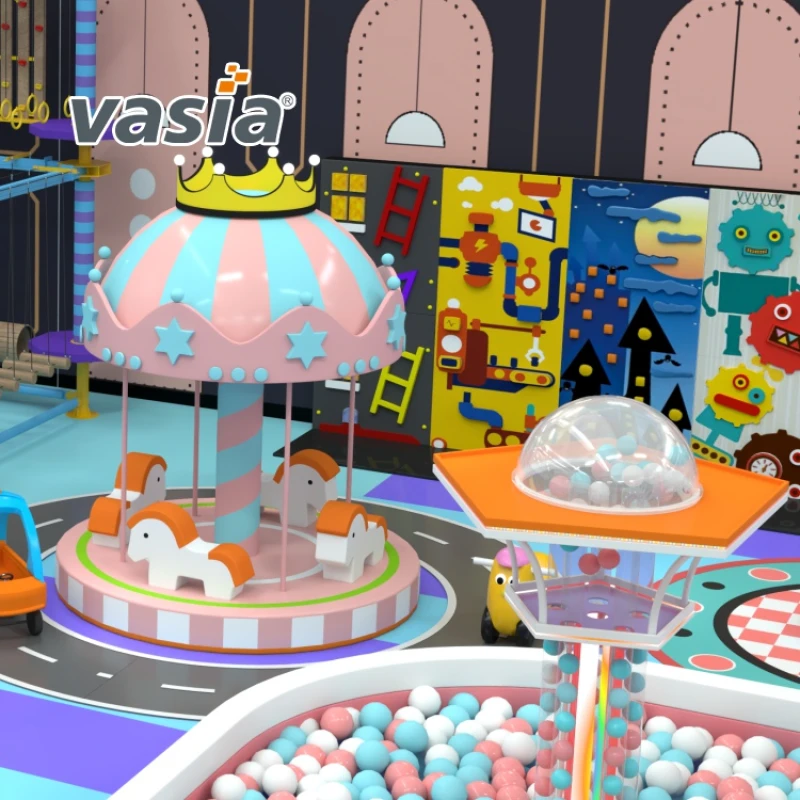
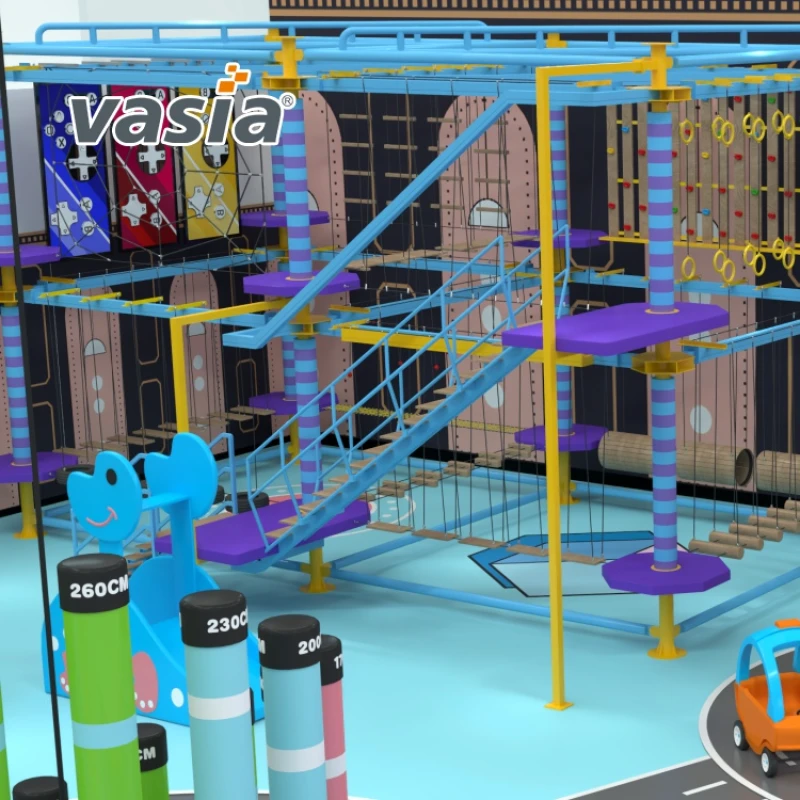
A full indoor playground has many gaming features. Most commercial systems include slides, climbing walls, tunnels, bridges, swings, trampolines and ball pits. Each function has a clear purpose. Children climb up the building and slide down. Tunnels connect platforms for children to explore. Bridges can help children practice balance and build confidence. The swing quieted the children’s movements.
Designers choose the right space for each function and support active play. These features allow children to move, think and have fun. They also spread children out in different play areas to help prevent crowding. Each area is connected to the next, so children can move easily. Commercial indoor playgrounds use different gaming features to attract families and encourage repeat visits.
Slides, Climbers, and Tunnels
Slides are linear, helical and wave shapes. Spiral slides save floor space and add to the fun. Climbing features include rope nets, padded steps and wall panels. Different types of climbing are suitable for children of different skill levels. Tunnels connect play areas for children. Swinging provides a gentle activity for children who like quiet exercise.
Vasia Indoor Playground offers slides, trampolines, rope courses, ninja classes and soft play areas. Its indoor rides are equipment suits children of all ages and energy levels. You can mix and match these features to suit your venue. Rope courses and ninja classes challenge older children to build strength and flexibility. Soft play areas sit next to larger rides so toddlers can play near older siblings.
Trampolines, Ball Pits, and Active Zones
An active play area provides opportunities for children to move and exercise. Mini trampolines make exercise fun. It raises the heart rate and helps the child improve balance, coordination, leg and core strength. A free bounce zone allows kids to jump, try out tricks and create their own games. Foam pits provide a soft landing, so children can practice somersaults and dives to reduce risk of injury.
The pit provides sensory play through the feel and sound of the ball. It also provides a way for active children to release energy. Kids can throw the ball and play together. Neanderthals and ninjas offer cardiovascular training, but they need closer supervision. Staff should pay close attention to those areas and set time limits.
Soft play equipment is suitable for toddlers who need a softer play area. It clings to the ground and is easy to clean.
Safety rules apply to every playground. The table below shows the criteria for these functions.
| Standard | Applies To | Safety Aspects Covered |
| ASTM F2970 | Trampoline parks | Proper padding, impact protection, fall height clearances |
| ASTM F1918 | Indoor venues | Equipment durability, fall protection, structural integrity |
Every piece of indoor play equipment needs safe flooring, safe parts, clear age markers and strict supervision rules. Parents should check cleaning schedules, especially ball pits, to help prevent the spread of germs. Padded floors and well-maintained cushions can help reduce the risk of falls and injuries.
Check age signs, attentive staff and clean surfaces before visiting. Ask staff about inspection records and routine cleaning routines. These simple checks can help protect children as they play. Commercial playground operators can build trust by following these safety and cleaning rules on a daily basis.
Themes and Custom Indoor Playground Design
A good layout is more than just good looks. It helps children find their way and lets it easy for adults to observe them. Good indoor playground design starts with how people move around in space. Pathways should be easy to follow, views should be clear and play areas should be suitable for children of different ages and energy levels.
Layout and Flow
Think of the floor plan as a map. Each area has a clear purpose, and each path leads to a safe place. The table below shows useful layout rules and how they help.
| Layout / Flow Principle | Recommended Practice | Safety and Supervision Benefit |
| Age-based zoning | Create separate areas for toddlers, main play activities, and teen or high-energy activities. Put toddler soft play near parent seating and use low barriers. | Keeps children with different ages and skill levels apart and lowers the risk of collisions. |
| Clear main walkways | Make main paths wide enough for two strollers to pass. Keep panels, storage units, and vending machines out of walkways. Place them in separate spaces. | Keeps emergency exits clear and reduces crowding. |
| Anchor attraction placement | Place the largest attractions toward the back of the playground, away from the entrance. | Reduces crowding near the entrance and keeps check-in areas clear. |
| Slide and ball pit discharge zones | Leave open space at slide exits and around ball pits. Do not direct slide exits toward walkways or other play features. | Reduces crowding and prevents collisions between children. |
| Sightlines and centralized seating | Place a café or parent seating area near the center. Use see-through knotless netting along edges and low padded walls around toddler areas. | Helps parents see children across play areas and on upper levels. |
| Entry, exit, and shoe storage flow | Use separate check-in and exit lanes. Put waiver kiosks in the lobby and place shoe storage beside the main path, not in it. | Prevents arriving guests, leaving guests, and children entering play areas from blocking each other. |
| Restroom, café, and party placement | Keep restrooms easy to reach from the play area. Place party rooms near the café and kitchen. | Reduces the need for staff to carry food through busy play areas. |
These choices work together. Parents can view the nursery and main play structure from the central seating area area. Children can walk along wide roads without bumping into each other. Workers can remove food and supplies from busy recreation areas. Every design choice helps make playgrounds safer and more fun.
Themed Settings That Spark Imagination
The theme turns a script structure into a story. The theme of the jungle is to encourage children to explore with plants, animal decorations and climbing nets. A space theme allows young astronauts to pass through tunnels and platforms. Modern design uses clean lines and bright colors to create an open feel. Each theme brings its own style to the playground.
Themed play areas can also help children improve their play skills. Puzzles, fake corners and sensory activities help them solve problems and use their imagination. Role-playing stations let children perform stories and learn social skills. Matching colors and textures helps create a consistent look. Modular parts allow operators to update designs over time.
Popular themes create different gaming experiences. The jungle theme features tropical plants, multi-layered structures and themed slides. Ocean motifs are used in blue, coral shapes, and wavy features around ball pits and toddler areas. A futuristic cyberpunk theme adds neon lights, high-rope courts and gaming areas. A macaron theme uses pastel colour slides, tunnels and role-playing areas. Each theme is tailored to a different audience and style.
Vasia offers custom designs, themes and layouts. Its teams manage design, manufacturing and installation. You can choose topics that suit your brand, space and visitors. This service helps keep the project simple and consistent.
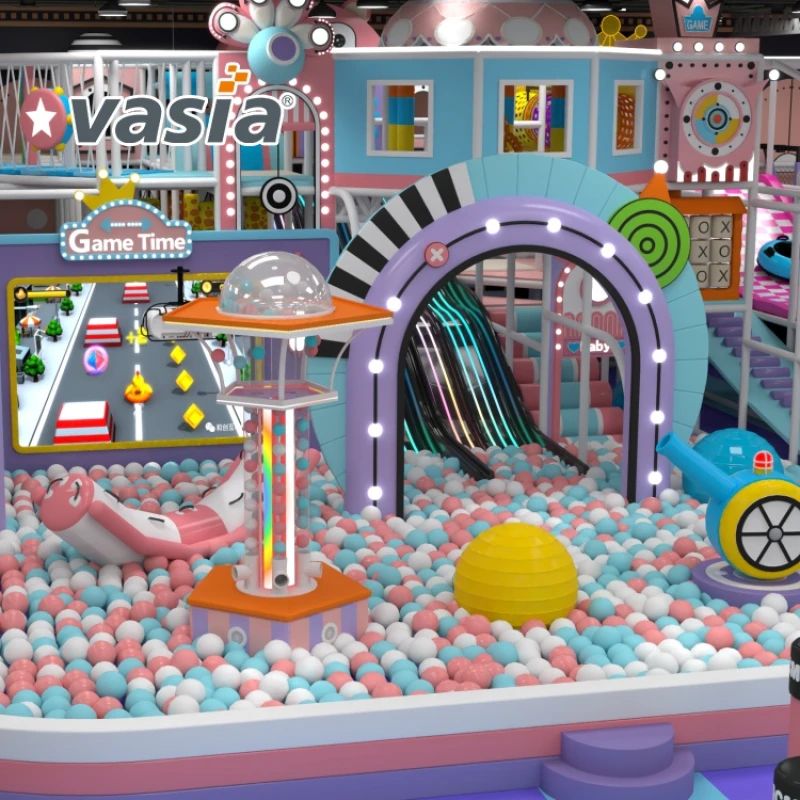
Soft Play Areas for Younger Children
Soft play equipment provides playgrounds for young children and preschoolers of all ages and sizes. The gaskets are easy to maintain and staff can clean surfaces in minutes. A soft play area for toddlers to keep toddlers away from older kids who walk faster. This helps reduce the risk of injury and allows young children to explore at their own pace.
Padded Equipment for Early Play
Soft play systems help children grow in several areas at once. The table below shows what each area of development gains.
| Developmental Domain | Benefits for Toddlers and Preschoolers |
| Physical | Play structures and ball pits help children build gross motor skills, balance, strength, flexibility, hand-eye coordination, and spatial awareness. |
| Social | Shared play areas help children make friends, take turns, negotiate, and solve conflicts. These activities build social and emotional skills. |
| Cognitive | Exploring play structures helps children develop problem-solving, critical thinking, decision-making, and planning skills. |
| Creative | Themed play areas and pretend-play activities encourage imagination, storytelling, and confidence. |
Free play can help children develop motor skills. These skills also support social and emotional growth. Children with low athletic ability may face behavioral and confidence challenges. The playground provides a place for young children to practice reincarnation, share, wait and commiserate.
Toddlers began interacting with others, speaking in turn. Pre-schoolers learn to work together to express their needs and use their imagination. Soft play systems give children chances to practice these skills through daily play.
Inclusive Designs for All Abilities
Vasia Indoor Playground offers inclusive design for children of all abilities. Commercial-grade soft play systems can be used by more children and feature the following:
- Wheelchair and mobility equipment access wide, flat
- Ramps that connect children to elevated play areas.
- Wheelchair swing and adaptive swing with safety seat
- Ground motion, photosensitive panels and touch functions
- A quiet place where children can rest under noise and lights.
- Pleasure equipment with different levels of physical challenge
These features can help children in wheelchairs participate in activities with their peers. When sound or light becomes too much, children with autism can use quiet spaces. Modular soft play systems allow operators to add or change parts as needed. Multi-level soft play systems and structures add more challenges, while ramps help children reach parenting areas.
Safety and Parental Supervision
Built-in security features are just part of the job. Adults need to pay close attention to children. Waterfalls are a common cause of injury in indoor playgrounds, especially on climbing structures and slides. Safe floorings and active supervision help reduce the risk of these injuries. Adult supervision is as important as fillers and safety standards when it comes to keeping children safe.
Why Supervision Completes the System
The right amount of oversight changes as your child grows.
| Supervision stage | Recommended age | Notes |
| Direct adult supervision | Until age 5 | Safety experts recommend close oversight |
| Continued nearby monitoring | Through age 7 | Independence depends on child awareness and facility design |
The safety of indoor playgrounds depends on good facility design and active supervision. Choose well-maintained play areas, dress your child appropriately and watch during play. If something insecure happens, trust your instincts.
Remind your child to play gently and treat others carefully before entering the play area. Teach them to share, wait their turn and avoid pushing. Don’t let them climb slides or play with buildings the wrong way. Encourage them to help each other and play safely.
Simple Habits for a Safe Visit
Start with age ranges. Check the posted signs and keep young children in soft play zones with soft play equipment designed for size. Follow the rules of the field and sit where you can see your child clearly. Choose places where employees move and enforce the rules. Good facilities also post clear rules at each entrance.
Bring clenched socks, labeled water bottles, basic first aid kits and a change of clothes for the children. Arrive early when the play area isn’t so busy. Intervene when there is a real security risk. This helps children build independence while remaining safe. Ask employees about routine cleaning and safety rules. Look at your children from the middle seat and let them play as much as they can see. Free play can help children develop skills. A short break would help them maintain their energy up.
Businesses with trained staff make these habits easier to follow. Many venues combine soft play systems with clear signage. Staff monitor busy playgrounds and help keep them safe. Toddlers are advised to play short plays and use soft play equipment close to their parents’ seats. Older children can extend play time by reporting regularly. Each visit should include active play and rest. These steps help create safe and fun playgrounds for every family.
An indoor playground systems is a complete play facility for enclosed spaces. They include a powerful frame, fun devices, an intelligent layout, and adult supervision. Each section works with the others to help children climb, glide and explore safely.
Safety and fun come together in a well-run indoor playground. Watch your children and follow the venue rules. This helps make each visit safe and enjoyable. Choose a playground you trust, bring your kids and enjoy the game. Understanding the workings of indoor playground systems can help families play safely.
FAQ
What age does indoor playground systems suit?
Most indoor playground systems are designed for toddlers to older children. Soft play areas suit toddlers and preschoolers. Rock climbing frames, slides and ninja classes are better for older children. Check the age sign before entering. Age-specific areas help children play in areas appropriate to their size and skills.
How long should the tour last?
Young children need shorter play sessions and regular breaks. Older children can extend play time by reporting regularly. Pay attention to your child’s energy and mood. If your child looks tired, take a break or leave.
What should my children wear?
Bring clenched socks, a labeled water bottle and a change of clothes for the kids. Choose comfortable, sporty clothes. Remove loose items such as jewellery and clothing with loose drawstrings. These steps help reduce the risk of tripping and falling.
Do I need to supervise my children?
Yes. ‘ Adult supervision is an important part of playground safety. Young children need close supervision and older children still need regular check-ups. Sit where you can see the baby clearly. Follow the rules of the place and let the children play in a suitable soft play area.
Can I customise a playground for my venue?
Yes. ‘ Vasia provides custom playground design, themes and layouts, as well as design, manufacturing and installation services. You can choose jungle, space or modern themes to match your brand and venue. Vasia designs products that meet applicable ASTM, EN, CSA, AS and NZS standards.