How to Choose a Commercial Playground Equipment Manufacturer
A commercial playground is used by many children every day. The manufacturer you pick affects safety, how long it lasts, and your budget for years. That choice really matters.
The market is crowded. Specs and claims are hard to compare, and a wrong choice is costly to fix. You need a clear way to judge each option.
This guide gives you a step-by-step path. You will learn to check a commercial playground equipment manufacturer’s reputation, compare material quality, verify safety standards, and weigh value. Follow it, and you can choose with confidence.
Key Takeaways
- Make safety your first concern by checking certifications and test reports.
- Check what other people say about the manufacturer. Look at their references and online reviews to judge their reputation.
- Compare the quality of the materials and how it is built for durability and climate fit.
- Think about the long-term value compared to the upfront costs, including maintenance and warranty.
- Ask clear questions about warranties, installation help, and custom designs.
Why Quality Equipment Matters
Safety Comes First
Safety should be your first concern when you pick a commercial playground equipment manufacturer. The quality of the materials and how it is built directly affects commercial playground equipment safety. Falls cause up to 75% of all playground injuries treated in emergency rooms, according to Playground Depot. The right surfacing can cut the risk of serious head injuries by up to 75%, the National Program for Playground Safety reports. A study in the National Library of Medicine found that climbing equipment at or above 6 ft had more than twice the fall injury rate of lower equipment. Quality commercial playground equipment lowers these risks with better design, smoother finishes, and fewer hazards. Fewer injuries also mean less liability exposure for you.
Durability and Warranty Protection
Look past an attractive playground design. Check commercial durability, documentation, and long-term costs. Higher-grade materials may raise upfront costs, but they cut long-term maintenance and replacement expenses. The durability of equipment shows in the price, and a durable product can serve for years or even decades.
A strong warranty protects your budget. Coverage often varies by component, as MooTon Group explains:
| Component group | What to check |
| Structural posts and frames | Material failures and corrosion conditions |
| Slides and molded panels | Cracking, deformation, or structural failure |
| Nets, ropes, and cables | Manufacturing defects and connector failure |
| Coatings and finishes | Premature coating failure |
Read the exclusions too. Normal wear, fading, vandalism, and improper installation often fall outside coverage. Labor, freight, and reinstallation may stay with you even when a part is covered.
Budget options fit low-traffic sites well. Heavy-use sites need higher-grade equipment to hold up. Match the grade to the traffic, and you get solid value either way.
Evaluate a Commercial Playground Equipment Manufacturer’s Reputation
A strong reputation is earned over years of steady work. It shows in how a company treats buyers, how its products hold up, and how it handles problems after the sale. You can verify reputation with a few focused checks.
Word of Mouth and References
Start with people who already bought from the company. Ask peers, facility managers, and park directors about their firsthand experience. Their answers reveal more than any brochure.
Then request references from projects like yours. Schools, parks, and municipalities each bring different needs, so match the reference to your setting. Happy Zone Play advises buyers to contact 2–3 previous customers in their region or with a similar project scope. Insist on seeing at least three similar custom projects with client testimonials. A quality manufacturer will share these without hesitation.
Ask reference clients direct questions. Did the equipment arrive on schedule? How responsive was customer service during installation? Has the safety record held up under daily use? Did the company honor its warranty claims? You can also arrange site visits to inspect finished playgrounds and gather user feedback, as MRC Recreation suggests.
Industry certifications add another layer of proof. The International Play Equipment Manufacturers Association (IPEMA) runs a product certification program for public play equipment and surfacing materials. Participation demonstrates a commitment to quality and gives buyers confidence. Note that the CPSC states there is no specific certification requirement for playground equipment, though children’s products may need a Children’s Product Certificate (CPC).
Online Presence and Track Record
A reputable manufacturer keeps a visible, verifiable record online. Check the official website first. Look at product pages, case studies, and the years in business. MRC Recreation recommends looking for companies with at least a decade of experience in the playground industry. A diverse project gallery shows work similar in scale and scope to yours.
Read online reviews and testimonials across several sources. Industry forums, social media, and local community groups all carry feedback. Pay attention to how the company responds to negative reviews. A calm, helpful reply signals good faith.
Industry recognition matters too. Awards and certifications from reputable organizations point to a high-quality manufacturer. A reputable company often offers complete custom design and installation services, which shows depth beyond simple product sales.
Use a mix of research channels. Search engines, business directories, and industry marketplaces help you build a shortlist. Trade shows and conferences let you meet the manufacturer in person. Industry associations offer resources and networking. Local distributors can also point you toward trusted brands.
Weigh every signal together. A long track record, positive feedback, and active certification tell you the company has earned its standing. That evidence lets you move forward with confidence.
Assess a Playground Equipment Manufacturer’s Materials
Materials decide how your playground holds up under daily use. A good playground equipment manufacturer matches materials to your climate and traffic. You should compare your options before you commit.
Materials Built for Heavy Use
Most commercial playgrounds use four core materials, according to AAA State of Play: galvanized or powder-coated steel, aluminum, high-density polyethylene (HDPE) plastic, and wood. Rope and textiles add climbing features. Each material fits different conditions.
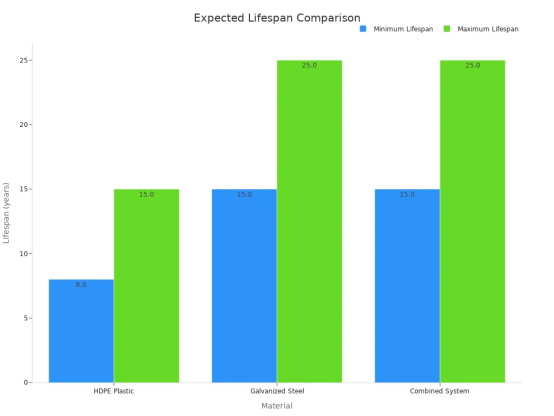
Galvanized steel carries the highest load capacity. It gives play structures their structural integrity. Steel posts and frames let a deck hold many children at once. The zinc coating prevents rust. Qilong Play reports that galvanized steel frames last 15–25+ years with proper maintenance. HDPE play surfaces typically last 8–15 years depending on usage intensity. The chart below from Qilong Play compares expected lifespans across material types.
Aluminum is lightweight and naturally rust-resistant. It suits coastal sites where salt and moisture attack steel faster. Rotationally molded polyethylene shapes slides, tunnels, and panels. Rotational molding produces a seamless, thick-walled part that handles constant use without cracking at the seams. Wood provides natural aesthetics for park settings. It needs the most attention because it can splinter, crack, or rot without regular sealing.
Plastic and coated metal handle weather with the least intervention. Plastic resists mold and mildew damage. It won’t splinter or rust. That makes it a strong fit for humid climates and sites without a dedicated grounds crew.
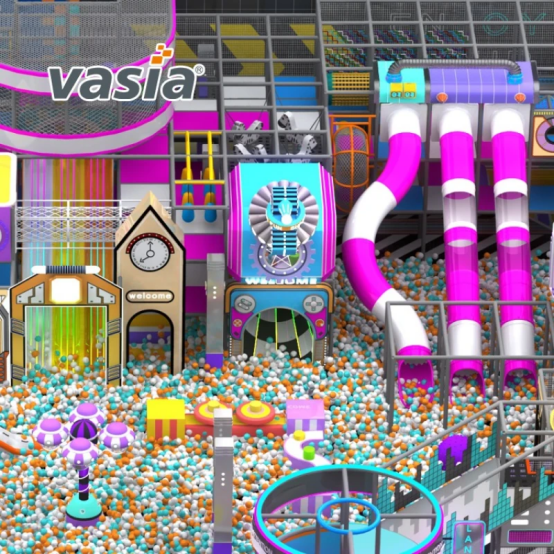
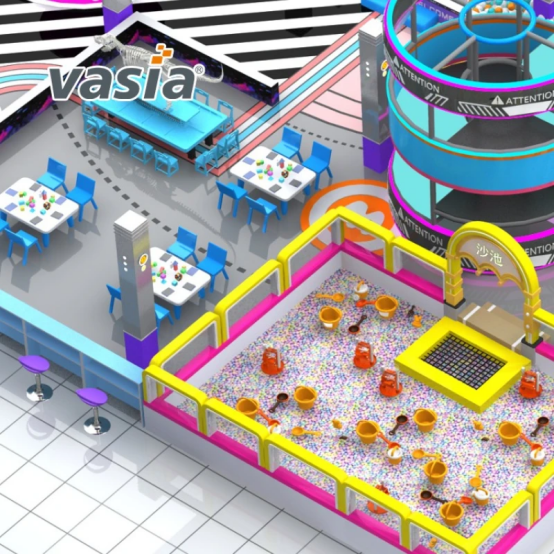
Vasia playground, established in 2000 and one of the top five playground equipment suppliers in China, builds its Outdoor Playground line from HDPE and galvanized steel with UV-resistant coatings. These materials deliver weather resistance and vibrant color retention. Eco-friendly materials and customizable designs are available.
Construction and Finish Details
Construction quality shows in the details. UV-stabilized plastics and powder-coated steel finishes withstand prolonged sun exposure, according to Playgrounds Etc. Powder coating bonds a protective, colorful layer to the surface. This layer helps prevent rust, fading, and scratches. Zoom Recreation notes that UV-stabilized HDPE stays fade- and crack-resistant.
Cleanability matters for daily upkeep. Plastic and coated metal wipe clean with mild soap and water. That keeps maintenance simple for your staff.
Developmental value comes from thoughtful design. Slides, panels, and tunnels in HDPE offer varied textures and shapes. These features support motor skill growth and creative play. Versatility lets you adapt one structure to different age groups and settings.
Ask your manufacturer about material grades and finish processes. Request samples when possible. Compare how each option handles your climate and traffic level. That comparison gives you a durable choice you can trust.
Check Manufacturer Safety Standards
Ask any manufacturer to show proof of its safety claims. Ask for the actual certificates, not just a logo on a brochure. A serious commercial playground equipment manufacturer will send them right away.
Certifications to Look For
Ask for paperwork for each standard that applies to your market. The table below lists the main ones, based on Miracle Recreation and Landscape Structures.
| Standard / Certification | What it covers |
| ISO 9001:2015 | Quality management system, checked by an outside group such as SGS |
| ISO 14001:2015 | Environmental management system |
| ASTM F1487 | American safety performance rules for public playground equipment |
| CAN/CSA Z614 | Canadian standard for children’s playspaces and equipment |
| EN 1176 | European standard for play equipment that stays in place |
| CPSC Handbook | U.S. guidance for designing, building, and caring for public playgrounds |
| IPEMA | Outside proof that a product meets ASTM F1487 or CAN/CSA Z614 |
Every product should go through strict testing and meet international safety standards. Vasia’s Outdoor Playground line, for example, is tested to international safety standards. Ask for test reports and the date of the latest update.
Safety Beyond Certification
A certificate alone does not make a playground safe. You also need to plan the site and the user experience. Keep these points in mind:
- Check use zones and clearances against the product instructions and the guidance that applies.
- Match equipment to age and ability. Slides need sensible height, speed, curves, and angle of descent for the users they are meant for.
- Plan separate zones for toddlers and older children, with clear labels and good sight lines.
- Check playground surfacing, entrapment risks, and accessible routes before you approve a layout.
- Ask what installation support and maintenance guidance the company gives.
Review fall hazards, access points, and moving parts with a qualified professional. That review turns a certificate into real playground equipment safety. Good equipment safety also depends on inspection and upkeep after opening. Ask your supplier for a maintenance schedule, and follow it.
Weigh Value and Peace of Mind
Cost vs. Value of the Best Commercial Playground Equipment
Compare the price you pay now with the cost over time. The equipment price is not the whole project cost. Freight, site prep, drainage, installation, surfacing, permits, inspections, and future upkeep all affect your budget, according to Playground Depot. A low purchase price can become costly when a busy site faces early wear, parts you can’t get, or rework.
Surfacing shows this trade-off clearly. Noah’s Play compares the options:
| Surfacing Option | Upfront Cost | Upkeep / Long-Term Value |
| Wood mulch | Cheapest upfront | Needs yearly top-offs and raking to stay safe and ADA compliant |
| Rubber mulch | Lasts longer than wood mulch | Needs containment and occasional leveling |
| Poured-in-place rubber | Costs more at first | Durable and seamless, with lower upkeep over time |
| Artificial turf | Not cheap | Possibly the best long-term value, easy to repair and expand |
Build a cost sheet for each option. Include equipment, freight, installation, surfacing, inspections, repairs, replacement parts, and eventual removal, as Creative Systems advises. Check the warranty terms too. New equipment may include coverage and support, but terms differ.
The best commercial playground equipment balances durability with your site’s looks and budget. Lower-cost options fit low-traffic sites well. Busy sites benefit from higher-grade builds. Vasia playground offers cost-effective Outdoor Playground solutions with custom design, international safety standards, and support from consultation to installation. Treat it as one strong option among others.
Peace of Mind and Visitor Appeal
A high-quality manufacturer gives you more than equipment. You gain a partner who guides planning, design, budgeting, and installation with clear communication, as S&R Playground describes. That support builds real peace of mind.
New equipment strengthens that confidence. You know its full history, you hold warranty protection, and you can confirm it meets current safety standards, Willy Goat notes. Certified equipment backed by paperwork also gives you a legal safety net.
Visitor appeal grows from the same foundation. Rope climbers, zip tracks, and sensory structures for young children draw families back. Custom themes and colors help your playground stand out. Strong quality keeps it looking good season after season.
Ask each manufacturer direct questions about costs, coverage, and support. The right partner protects your budget, serves your community safely, and keeps visitors coming back for years.
Picking a commercial playground equipment manufacturer is a choice about safety, durability, and long-term value. Price matters, but it should not be the only reason you decide. A low price can hide higher costs later.
Use the checklist before you commit. Compare reputation, materials, certifications, and overall value. Ask each manufacturer direct questions about warranties, test reports, and installation support. Check reputation with past clients. Visit finished sites when you can. Read the warranty terms closely. A strong reputation and clear answers show the best manufacturer for your needs.
The right partner gives you peace of mind. You get a playground that attracts visitors and equipment that serves your community well for years.
FAQ
How do you check a manufacturer’s safety claims?
Ask for the real certificates and test reports, not just a logo on a brochure. Request proof that the equipment meets standards like ASTM F1487 or EN 1176. Make sure the report date is recent. A serious manufacturer will send this paperwork right away.
What should you ask a reference client?
Ask about delivery schedules and how the company handled problems after the sale. Find out whether the equipment has held up under daily use. Ask if the manufacturer honored warranty claims. Contact two or three clients whose projects are similar to yours.
How long does commercial playground equipment last?
With proper maintenance, commercial playgrounds usually last 15–20 years or more. Galvanized steel frames often last longer than plastic play surfaces. Your climate, traffic level, and upkeep schedule all affect the real lifespan.
Can you order a custom playground design?
Many manufacturers offer custom design services. Ask whether the company handles design, manufacturing, and installation as one package. Request examples of past custom projects. Confirm the custom design still meets the safety standards for your market.
How do you compare quotes from different manufacturers?
Build a cost sheet for each quote. Include equipment, freight, installation, surfacing, inspections, and replacement parts. Compare warranty terms side by side. A low purchase price can hide higher costs later.