Indoor Playground Supplier Guide: 5 Steps to Compare Quality and Cost
Your offer looks about the same, but materials, safety tests and extras may differ. This guide gives you five steps to compare the quality and cost of indoor playground suppliers.
Your final cost may be higher than planned. Underestimated infrastructure costs can increase by about 30%. International shipping, tariffs, and taxes can add 20–40% to equipment prices. Focus on overall value, not just the lowest price.
Key Takeaways
- Choose a playground design that suits your space and your child’s age. This can help you avoid costly changes in the future.
- Check the quality of safety certificates and materials to ensure the safety of children and reduce risks.
- Ask how long the device will last in daily use.
- Check equipment prices and the full cost of the project separately to avoid additional costs.
- Check warranty, support and customer reviews and select reliable suppliers
Step 1: Match Design to Your Space
Design Suitability and Age Groups
Start in your room, not the catalog. Design must be appropriate to your ceiling height, floor area, and target age group. Check the design before comparing other details. A toddler area needs low platforms and soft edges. Older kids’s play areas require climbing challenges and a clear view of staff. Ask each vendor how the layout works for your visitors. This can help you avoid costly changes in the future.
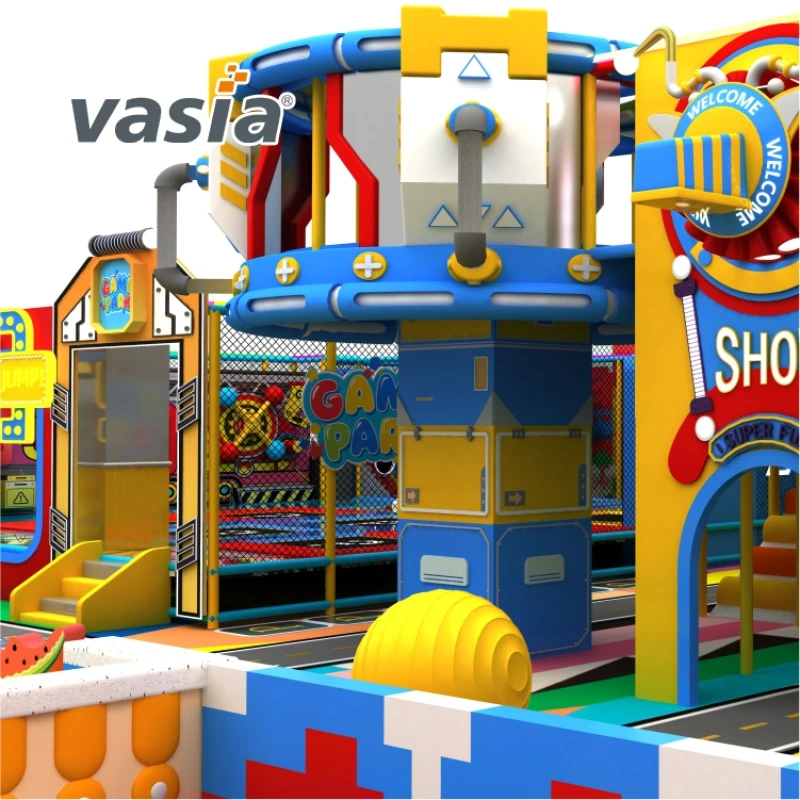
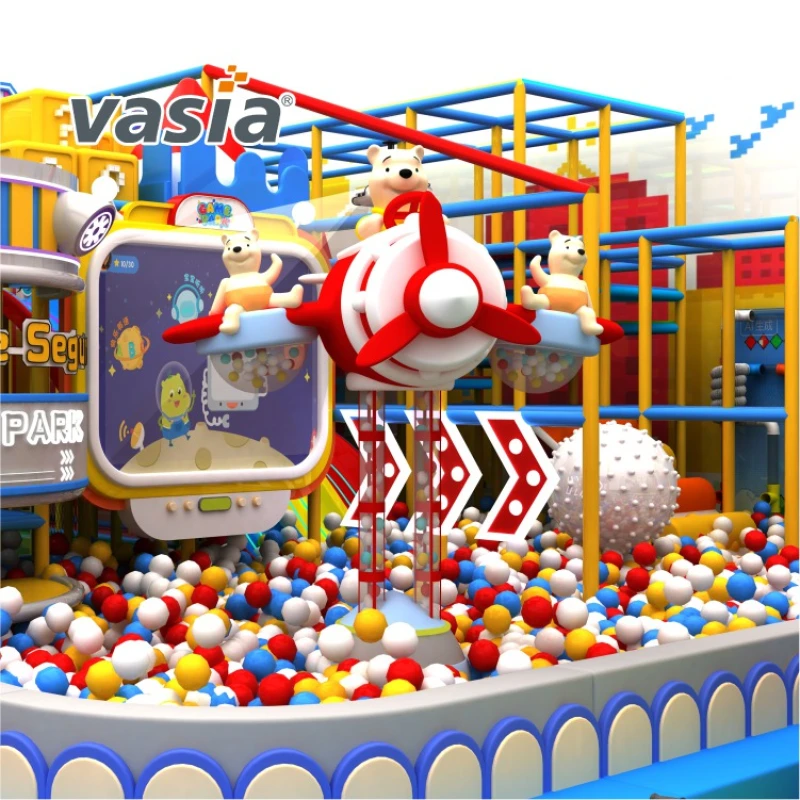
Age groups also need separate play zones. You should have different areas for toddlers, school-age children and mixed-age play. Good zoning keeps kids safe and reassures parents. It can also help you choose the right indoor rides. Vasia Indoor Playground offers custom themes and layouts for malls, schools and daycare centers, such as jungle, space and modern styles. This allows you to choose designs that suit your visitors.
Custom Indoor Playground Layouts
Ask for layout drawings and age groups before asking for quotes. A map shows how commercial indoor rides match the floor plan. It also shows unused spaces, blocked exits and areas that are difficult for staff to monitor. Compare drawings side to see which supplier understands your needs.
Discuss modularization and customization design as early as possible. Modular systems are faster to install and initially cheaper. Custom layouts suit rooms with shapes and special themes. The right choice depends on your space and needs. Check for safety features in each design, such as padded surfaces and rounded edges. Each supplier is then asked to quote according to the same plan. This makes it easier to compare cost and quality.
Step 2: Check Safety and Material Quality
Safety Certifications to Verify
Before talking about price, ask each supplier for proof that their product complies with safety rules. Key standards include ASTM in the USA, EN in Europe, CSA in Canada, AS in Australia and NZS in New Zealand. Consult IPEMA for validation when applying. This indicates that a third party inspected the rides.
Do not accept the signs on the brochure as evidence. Ask for certificate numbers and check they match the model you plan to buy. Vasia Indoor Playground states its products meet ASTM, EN, CSA, AS and NZS standards. You can ask the file to check this out. Good safety standards help protect children and reduce the risk of legal claims.
Material and Build Quality Checks
Material and construction quality affect the performance of your indoor playground equipment after opening. Check if the packing surface is even and thick. Run your hands along the edges to make sure they are round and have no sharp corners. Documents certifying that foam, vinyl and paint are nottoxic are required. Children are exposed to this material every day.
Check construction details. Loose bolts can be a problem because routine use and temperature changes can loosen bolts. Look for cracks, crunches, bolts sticking out. Rusts can appear as orange marks, peeling metal, or thin spots on joints. A gap of between 3.5 and 9 inches can trap a child’s head, so measure it during inspection.
Also check floor surfaces. Dirt, open seams and uneven edges can all cause problems. Poor floor preparation can lead to cracks, bubbles or loose tile edges. Uneven joints can also cause children to fall. Ask suppliers how to keep the surface looking good for a period of time, not just on opening day. Check these quality details and prices to help protect your budget and reputation.
Step 3: Compare an Indoor Playground Manufacturer’s Durability
Both offers can have the same price but offer very different useful lives. Over time, durability can affect your overall cost. Some indoor playground manufacturers cover up shoddy construction with glossy brochures. Check the way the equipment is handled in daily use, distinguishing between strong and weak products and those mainly used for presentation.
Construction and Build Indicators
Please introduce the following details to indoor amusement equipment manufacturers:
1.Check steel frame using high-grade galvanized pipes. Minimum wall thickness required.
2.Check each weld for poor craftsmanship. Poor welding can lead to structural failure. Uncoated steel quickly in damp places.
3.commercial-grade LLDPE plastic needed. In heavy use, it resists fading and cracking.
4.high-density EPE foam padding required. Bad foam loses its shape and cracks on daily shocks.
5.Check that PVC coverings are made of strong fabrics with high denials and reinforced stitches.
6.Strong, net-free netting is required in the play area.
7.Request physical samples and recent photographs of hardware, connectors and fasteners.
Thick cushions are not always safe. Foam density, recovery, adhesion and impact properties are also important. Ask manufacturers to provide spreadsheets showing these quality details..
Durability Questions for Suppliers
Ask each shortlisted indoor playground manufacturer four questions. How long can the device be used for everyday commercial purposes? What maintenance does it require, and how often? Which parts of a modular indoor play set can be replaced without the need to modify the entire structure? How quickly can you ship replacement parts?
Ask each manufacturer for the exact part number of the foam or mesh plate. See if they have any stock. If the supplier is unable to identify parts after three years, you may need to pay another company to replace them. Easy access to spare parts helps to keep equipment safe and reduce downtime.
Vasia playground has been making rides since 2000 and is one of the top five suppliers in China. However, compare the strengths and weaknesses of the indoor rides listed above. Check their quality, maintenance support and spare parts side by side.
Step 4: Analyze Indoor Playground Equipment Costs
Indoor Playground Equipment Cost Guide
Start with equipment quotes and then develop a full project budget. This guide to cost of indoor rides separates equipment prices from design, transportation, installation and maintenance costs. As a simple guide, add 30% to the price of the equipment to estimate the total cost of the project before rent, personnel and marketing:
| Cost Category | Share of Total Budget | Scope |
| Play Equipment | 30–50% | Core structures, attractions, interactive elements, and all play components |
| Site Preparation | 20–25% | HVAC, electrical, lighting, plumbing, and structural changes |
| Installation | 15–20% | Professional assembly, safety testing, final inspection, and commissioning |
| Safety Flooring | 10–15% | Rubber mats or foam padding ($5–$20 per sq. ft. installed) |
| Design & Planning | 3–5% | 3D renderings, layout planning, theme concepts, and engineering |
| Permits & Insurance | 2–5% | Business licenses, liability insurance ($10,000–$50,000 per year), and inspections |
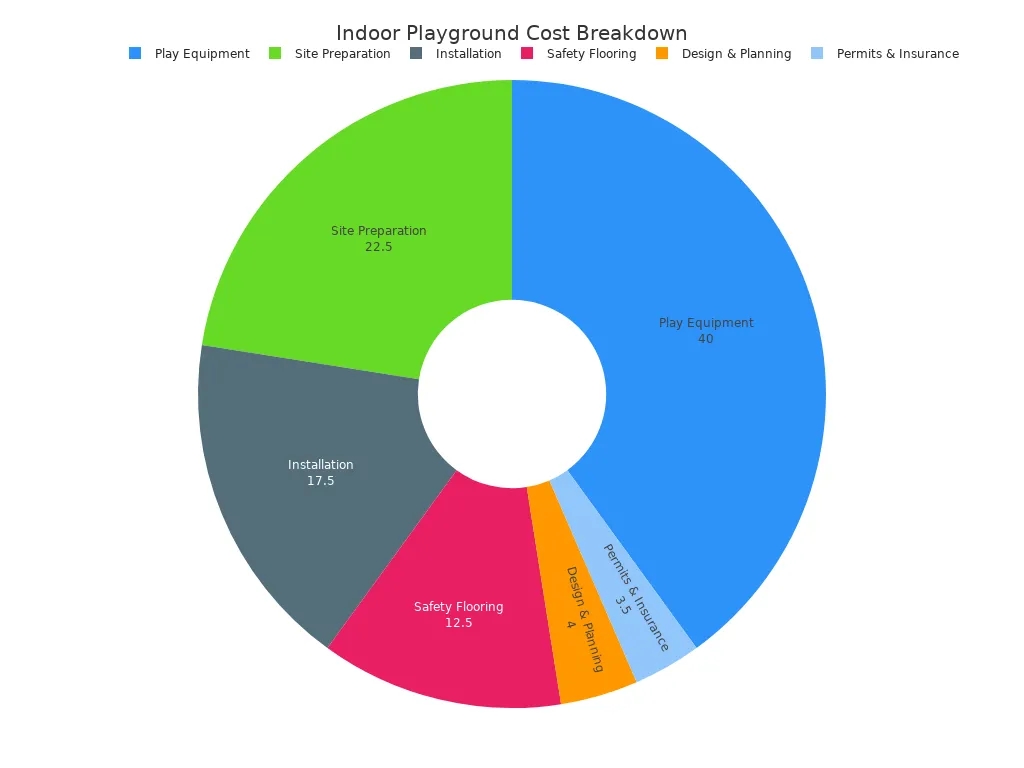
Calculate the cost per square foot of indoor play equipment and then compare prices from different suppliers for the same item. Due to different equipment types and designs and different costs, ask each vendor to quote for the same item. This will help you compare the price of indoor rides. At the same time, check the selection of modular indoor play equipment. Over time, these systems can reduce installation and maintenance costs.
Hidden Fees and Total Cost of Ownership
Note that additional costs may not be included in the first offer. Shipping, import duties, and local taxes can add 20–40% to equipment prices. Installation of a medium-sized playground can cost an additional $5,000 to $15,000. You may need to pay for airfare, hotel, meals and on-site equipment. Additional site preparation costs $2,000-$8,000. Repairs and supplies account for about 8 to 12 per cent of the value of equipment per year.
Potential hidden costs include design changes, ocean shipping, customs duties, local deliveries, installation labour, equipment leasing, safety flooring, fire safety changes, additional fillings, spare parts, regular maintenance, permits and inspections. Some of those costs may not have been clear in the first offer.
Add these costs to your total budget before you sign the contract. Indoor rides are only part of the bill. These extra costs can make the final price much higher than the offer. Runways are paid for over the life of the playground, not just the first year. safety flooring and spare parts were budgeted from the outset. This will help you control costs and protect your profits and reputation.
Step 5: Vet Your Indoor Playground Supplier
Warranty and After-Sales Support
Ask each indoor playground supplier to provide written warranty terms. Warranty coverage varies by company. Some indoor playground manufacturers offer an 18-month warranty, while others offer longer coverage.
Dreamland Playground says it offers a lifetime warranty on its commercial indoor playground products. It also says its products meet international and domestic quality and safety standards, including ISO, ASTM, EN, and NFPA.
Happy Zone states that its commercial equipment has a 5-year warranty on frames. Mats and spare parts have a 1-year warranty. Compare the terms line by line. A long warranty may not cover parts that wear out. Ask what support the supplier offers after the warranty ends. Also, make sure spare parts will still be available.
Vasia Playground provides design, manufacturing, and installation services. It serves schools, malls, and recreation centers. A client in Spain installed 3,000 square meters of Vasia indoor playground equipment. The client used it for five years with stable performance and low maintenance needs. This shows the durability of non-powered equipment and the value of reliable after-sales support.
Ask each indoor playground manufacturer about remote technical support, training for installers, and delivery times for replacement parts.
References and Track Record
Requesting real case studies, not just brochures. Find two or three clients who run venues like you and call them. Find out how the device holds up after years of routine use and how quickly the supplier can fix the problem. Custom items of 3,000 square meters typically take 45 to 60 days from order approval to delivery. Site installation will take another 15-30 days. Check that suppliers have complied with these schedules in past projects.
Check the basics for yourself. Look at the company’s founding year, product range and certification. A supplier with a long history and a wide range of products can provide better support. Compare several indoor amusement equipment manufacturers at this point. It depends not only on price, but also on quality and cost. Choose 2-3 indoor amusement equipment manufacturers and ask for quotes and customer references before signing up.
- Match designs according to your space and age.
- Check safety certifications and material quality.
- Durability tests are conducted for specific problems.
- Compare equipment prices with total project costs.
- Check warranty terms, aftermarket support and customer references.
Use these five steps to review each supplier on your shortlist. Compare the total value, not just the price. Low prices may mean poor materials, lack of certification or additional costs. If the equipment has a longer lifespan and spare parts are readily available, higher prices may reduce long-term costs.
Ask each shortlisted supplier to provide a detailed quote based on the same requirements. Similar premises are required to provide documentation. Compare the offer with the terms of service before making a choice.
FAQ
How to check an indoor playground supplier’s safety claims?
Document numbers, not just identification, are required. Make sure the model you tested matches the one you plan to buy. Check ASTM, EN, CSA, AS and NZS files. When IPEMA is applied, also check for IPEMA validation. Reliable indoor playground providers will provide these documents.
What guarantees should indoor amusement equipment manufacturers offer?
Warranty terms vary from company to company. Some indoor playground manufacturers offer about 18 months of service, while others offer longer. Check the terms of worn-out parts such as cushions and netting. Ask about support measures at the end of the warranty period. Ensure spare parts are still available.
How long does it take to customize a project from an indoor amusement equipment manufacturer?
Custom items of 3,000 square meters typically take 45 to 60 days from order approval to delivery. Installation will take another 15 to 30 days. Ask each indoor playground manufacturer for a timeline of past projects. Contact their clients to check that the work was finished on time.
What ongoing costs should I consider in addition to the purchase price?
Plan is to spend between 8% and 12% of the equipment’s value annually on maintenance and supply. Shipping, import duties, and taxes can add 20–40% to equipment prices. Set aside extra money for site. Compare the total cost to indoor playground manufacturers, not just the purchase price.
How to compare indoor amusement equipment manufacturers?
Request the same quotation from each supplier. Compare layout drawings, safety certificates, material details and warranty terms. Contact customers who operate similar venues. Check the durability and safety of the device, then compare these factors with the price to find the best value.