The Ultimate Guide to Writing an Indoor Playground Business Plan
Why Does an Indoor Playground Need a Business Plan? Lenders use it to check you understand the market, costs and risks. Without it, access to funding may be more difficult. business plan can also help you test your ideas before you sign a lease.
A good business plan lets lenders know your business can succeed. It can also help you spot risks early. Clear financial projections show how your indoor playground makes money and pays its bills.
Step by step, you can work out a business plan for opening an indoor playground. The guide covers market research, day-to-day operations, security, costs, marketing and risk management.
Key Takeaways
- ·
- Research nearby homes and other amusement park businesses to form your amusement park idea.
- Choose an easy-to-find location with simple parking and stroller access.
- Choose safe, commercial-grade equipment for children and chart a clear path.
- Set up a secure capacity and place staff in each area during peak hours.
- List all startup costs and get a written quote for the equipment.
- Use different ways to earn money, such as the Open, birthday parties and memberships.
- Publicise your playground on social media before opening to attract families.
- Keep a record of safety checks, buy appropriate insurance and reduce risks.
Market Research For Your Indoor Playground Business Plan
Market analysis is the first step in developing a business plan for indoor rides. You need to know who lives nearby, how much they pay and what other playgrounds offer. This research can help you decide on equipment and prices. .
Define Your Target Customer
Families With Young Children
From infancy to parents of 12 ages old. Count families with children in this age range who live within a 15–20 minute drive. Local Chambers of Commerce, city websites and federal statistics websites can provide such data. You can also contact a nearby school to ask about student enrollment.
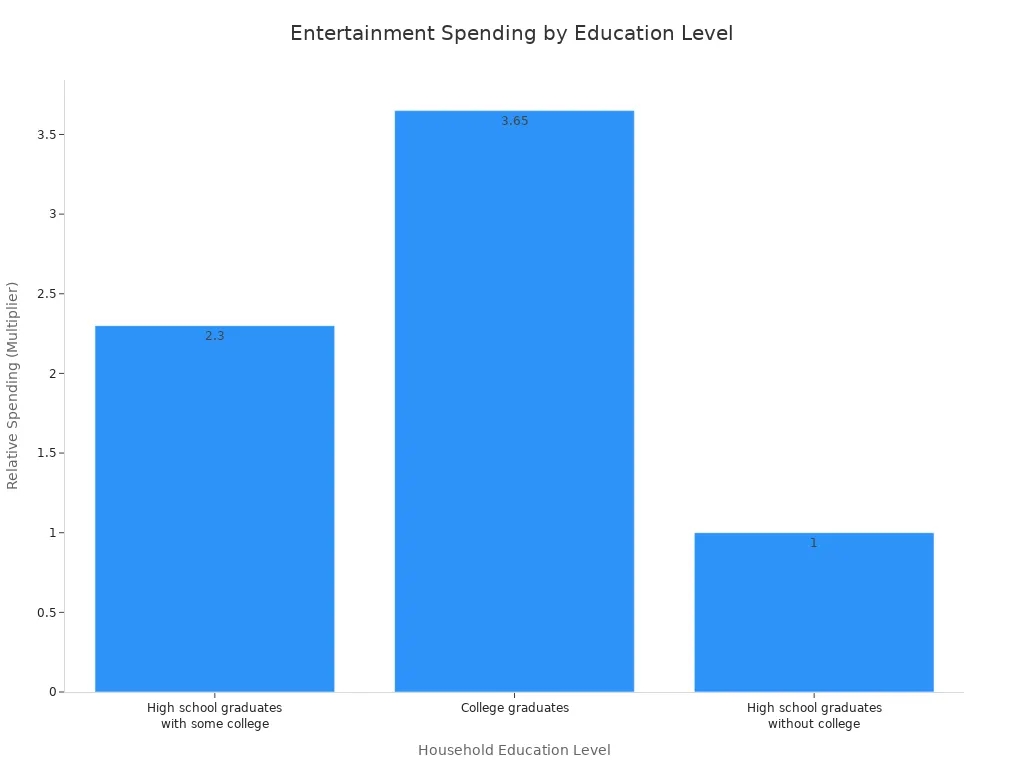
Census data from 2015 showed 28% of household entertainment spending was on entertainment experiences. This suggests demand for places such as indoor playgrounds. Family education levels also help predict spending on entertainment outside the home:
| Household Education Level | Out-of-Home Entertainment Spending (relative to HS graduates without college) |
| High school graduates with some college | 2.3x |
| College graduates | 3.65x |
| High school graduates without college | 1x (baseline) |
Party And Group Buyers
Party organizers, schools and community groups are another group of clients. They often book tickets for many people at a time, spending more each time. List local schools, daycare centers and community groups within a 15-20 minute drive. Their schedules can bring in more business on weekdays.
Analyze Local Competitors
List three to five nearby play spaces. Visit each one to check prices, capacity, themes and customer reviews. Use a SWOT analysis to find standout methods, such as a unique theme or better security rules. Ask parents what they’re missing, such as separate toddler area or healthy food options.
Look for common problems. High prices, loud noise and poor cleanliness are common complaints. You can solve these problems by pricing children and adults individually, providing quiet space for parents and cleaning visual devices. You can also offer a number of different services, such as extended opening hours or more types of activities.
Choose The Right Location
Visibility and accessibility affect whether families return. Find a clean entrance, easy stroller access, plenty of parking and nearby public transportation. If you choose a shopping centre, choose an area close to family shops and food outlets where people can see from main footpath.
Check the ceiling height and space layout before you sign a lease. Make sure the lease gives you time to build the playground and protect you in the event of a permit delay. Make sure the space meets your device plan and meets local specifications.
This research is the basis of your business plan for indoor recreation. The data you collect here will help you prepare for the financial section later.
Operations And Safety For Opening Your Indoor Playground
Your operating plan explains how to safely manage your indoor playground every day. This part of the business plan includes equipment, personnel and safety rules. Lenders check these details to see if you can run a commercial indoor playground without major problems.
Equipment Selection And Layout
Layout rules protect children and keep sightlines open. Use this table as a planning checklist:
| Equipment / Zone | Layout and Safety Requirements |
| Slide exits | Provide a padded landing zone. Keep it at least 1,500 mm from the climbing entry path where site conditions allow. |
| Trampoline queues | Place queue lines at right angles to the trampoline surface. |
| Toddler zone | Use a continuous barrier with one controlled entry point. Keep fall heights around 600 mm and use soft equipment only. |
| Columns | Cover columns with 50 mm EPE foam and fire-retardant PVC over the full reachable height. |
| Ceiling clearances | Leave at least about 600 mm above static play surfaces and about 1,500 mm where children may stand. |
| Parent sightlines | Keep solid base panels facing seating no higher than 800 mm, with mesh above that height. |
List all materials in the contract. Commercial galvanized steel, EPE or XLPE foam, flame-retardant PVC with a reference density of about 35 kg/m3, and sealing tests meeting EN 1176 or ASTM are required. Divide play area by age, because 3-year-olds on a 48-inch-high platform face different risks than 8-year-olds who want to run faster.
Capacity And Staffing
Before hiring, prepare for competency. Set a security limit for each area and then add a limit to get the total capacity. Fire codes and local ordinances can set lower limits. Set up your booking system so that parties and open plays never exceed safe totals.
Staffing needs depend on capacity. During busy working hours, assign at least one attendant to each supervised area. You also need a receptionist and a party coordinator. Track the number of visitors in the first few months, then adjust staff shifts based on demand. Set a payroll budget as share of your income. Salary estimates are based on projected sales, not rough guesses.
Safety Protocols And Compliance
Your security plan should follow accepted standards. Vasia’s Indoor Playground comply with ASTM (USA), EN (Europe), CSA (Canada), AS (Australia) and NZS (New Zealand) standards. Please list the exact standard and version of each device in your Indoor Playground business plan.
Keep clear records to indicate that equipment meets standard requirements. Including layout drawings, material detail, test and inspection reports, installation instruction, use scope, maintenance plan, personnel training materials, etc.. When handing over, check that the manual matches the equipment installed.
Establish a formal change process. Review safety risks and record changes to each piece of equipment prior to approval. Train staff to inspect equipment daily, record problems, prevent access to unsafe areas, and log every repair. These records show that your security plan is being used, not just on paper.
Financial Projections For Your Indoor Playground Business
Numbers can help lenders decide whether your business will succeed. This section shows the startup costs of your indoor rides, expected incomes and how long it will take to recoup your investment. Use your previous market research to make your financial predictions. Build your data on local data, not national averages.
Startup Costs And Funding
Make a full list of startup cost before meeting with your lender. Divide each expenditure into four areas: facilities and construction, equipment and amenities, legal and administrative costs, and initial staffing and marketing. Included are lease deposits, architect fees, HVAC and electrical work, safety flooring, point-of-sale software, licenses, insurance, background checks and business promotion.
Build-Out And Equipment
Equipment is usually your largest single expense. Use the table below to estimate costs based on your floor plan and available space:
| Park Type | Typical Size (m²) | Estimated Equipment Investment (USD) |
| Small Indoor Playground | Under 200 | $50,000–$100,000 |
| Mid-Sized Family Entertainment Center (FEC) | 200–1,000 | $150,000–$300,000 |
| Large Adventure or Destination Park | 1,000+ | $300,000+ |
These figures include only equipment and do not include rent or construction work. The overall startup costs are high. Smaller play café of 2,000 to 4,000 square ft.s typically cost $75,000 to $250,000 or more. Medium-sized indoor playgrounds of 5,000 to 10,000 square feet cost $250,000 to $750,000 or more. Large facilities larger than 10,000 square feet could cost $750,000 to $1 million or more. Most indoor playgrounds cost between $75,000 and $1 million to open.
Separate costs for indoor rides are included in the budget. Vasia Playground’s customizable indoor playground offers themed design, modular components and installation. This can help you plan costs more clearly. Ask for a written quote based on your layout and include it in your business plan.
Permits, Insurance, And Working Capital
Licences and licence fees depend on location. Prices range from a few hundred to a few thousand dollars. One operator reported paying just $75 a year for a health license. Even with a small menu, the equipment needed will be much more expensive than expected. Set aside extra money to cover these costs.
Incorporate insurance into the start-up budget. General liability insurance costs about $45 per month. A business owner’s policy costs about $83 a month, and workers’ compensation is about $54 a month. Comprehensive playground insurance typically ranges from $350 to $900 per month. For a small and medium-sized facility, this equates to $4,200 to $10,800 per annum.
You can get funding from several sources. Private financing options include personal savings, home equity, angel investors, crowdfunding, and funds with clear contracts from friends and family. Commercial lenders provide term loans, commercial lines of credit, equipment financing and leases, and merchant cash advances. Grants and local sponsorship can also help cover costs if you can show how the business will benefit society.
Revenue Streams And Pricing
Use multiple sources of income so businesses don’t rely on just one. Open play access provides a steady base of revenue. Birthday party packages typically bring the highest profit margin, with many operators reporting waiting lists lasting months. Food and drink help prolong the family’s stay at the venue. Membership and multiple access passes encourage families to return. Retail, classes and private rentals bring in more revenue.
Prices are based on the number of guests, time and content of each package. Open play at one site costs $27 per child and $22 per sibling. Admission is free for up to two adults per child. Birthday party packages for 20 children and 30 adults start at $1,500 and last two hours. $15 per additional child and $10 per additional adult. Bigger venues offer packages starting at $2,000 for 25 children and 35 adults. Both venues are subject to a 15% service charge and 10.25% tax.
Break-Even And ROI Analysis
Monthly break-even sales = fixed expenses ÷ contribution margin ratio. contribution margin ratio = (revenue − variable expenses) ÷ revenue.
For venues, for example, the fixed operating expenses are $36,000 per month, the monthly revenue is $45,324 and the variable expenses are about $4,241. Variable expenses represented approximately 9.36 per cent of sales costs and contributed a margin of approximately 90.64 per cent.
Break-even sales = $36,000 ÷ 0.9064, or $39,716 per month. Venues must meet about 87.6% of their planned sales to cover their operating costs.
To calculate ROI, divide annual net profit by total startup investment. Use a free template to organize this data and test different capacity and pricing plans before investing.
Marketing Your Indoor Playground
Pre-Launch Brand Building
Start your marketing plan at the design stage, not a few weeks before opening. Publish photos of building updates, designs and equipment being installed. These posts can help prospective customers connect with your business before it opens.
Use social media with clear goals. Share preview videos and countdown images on Facebook, Instagram and TikTok. Facebook Events and Groups help create a local community. Instagram Reels with local hashtags help reach nearby homes. Short TikTok videos help more people see your content. Work with influential local family members and parenting bloggers. Collect email addresses through official groups and signup list.
Use physical space to help promote your business. Attractive entrances, special slides and bright neon signs encourage families to take photos and share them online. This helps to disseminate information at a lower cost. Focus on happy children and family games, not technical details. A grand opening ceremony was held and a special invitation was issued to turn early interest into a first visit.
Promotions And Party Packages
Set up party package as a better ladder with three or four distinct tiers. A basic layer includes core play access plus a private or semi-private party space for a fixed time block. Mezzanine adds food, drink or extra play time. The premium tier includes food and beverage, dedicated hosts, decor and premium attractions.
Price of each floor is a significant increase in value, rather than a separate list of items. This makes the choice easier and raises the average party fee. Group add-ons fall into four categories: experience add-ons such as extra playtime and private access windows; convenience add-ons, such as install and clean; food and drink add-ons; and merchandise add-ons, such as goodie bags. By contribution margin Rank add-ons, as extra play time uses good packs you already have you can earn more money with the cost of materials. Linking seasonal events to the same tier of logic.
Retention Through Memberships
repeat visits are encouraged through monthly memberships or punch card plans. For example, sell a pass for 10 visits for $90 instead of $100 and let families use it for 120 days. Only one visit per child. This helps families commit to future visits. Track how many first-time buyers use the pass and the average number of days between purchase and first use. This shows whether the pass has become part of family life.
Use loyalty rewards to encourage regular visits. café voucher worth $3 after 5 tours, after fee check. One $5 voucher for future use after 10 tours. If a family does not visit for 45 consecutive days, send a $3 discount for a standard child ticket. The offer is valid for 14 days and gives the family a reason to return at the end of theterm.
A membership freeze is allowed so families can pause their plans if their needs change. Referral rewards and early access activities can help retain existing customers and introduce new ones. Sales, renewals, frequency of visits and customer engagement reviewed every 30 days. Avoid hidden fees that can undermine customer trust.
Risk Management And Contingency Planning
Identify Key Business Risks
Waterfalls cause most damage in indoor playgrounds. about 70% of such accidents occur on climbing buildings and slides. Good flooring and active supervision help prevent these injuries. Your business plan should identify this risk and explain how you will manage it.
Other common risks that should be part of your business plan:
- Overcrowding: Overcrowding can lead to collisions, so clearly limit the number of visitors.
- Age-inappropriate play areas: Young children can get hurt on devices built for older kids, so keep play zones separate by age.
- Poor equipment: Worn mesh, exposed bolts, broken cushions and sticky surfaces can all cause damage, so check equipment daily.
- Poor oversight: Poor oversight increases risk, so staff are placed in more vulnerable locations.
- Slide jams: Children may collide at the exit of slide, so control the flow of children and keep exit areas clear.
- 3. Overheating: Children tend to catch fire during activities, so plan to cut off water every 20–30 minutes.
- Bacterial spread: Bacteria can spread easily, so ask families to leave sick children at home and clean up body fluids in a timely manner.
Insurance And Liability
Insurance protects your investment and your guests. Compare the main policies before you open:
| Recommended Policy | Purpose / Key Details |
| General liability | Covers third-party claims. Medium-sized operators often carry at least $1 million per occurrence and $2 million in total coverage per policy period. Choose limits based on a site-specific risk review. |
| Property insurance (including equipment) | Covers play structures, padding, flooring, and special equipment such as trampolines. Keep equipment lists and serial numbers to help prevent claim disputes. |
| Business interruption | Helps cover losses when the business must close for weeks because of a major claim or a regulatory shutdown. |
| Workers’ compensation | Required in most places. Covers eligible employee work-related injuries, which can happen in indoor playgrounds. |
| Sexual abuse/molestation (SAM) coverage | Some insurers require this coverage for facilities where children may have access without direct supervision. Keep records of background checks and staff-to-child supervision ratios to help meet insurance requirements. |
At a minimum, indoor playgrounds should have general liability, property insurance (including equipment) and workers’ compensation. Facilities for children too often need to cover sexual abuse and molestation. Choose coverage based on an assessment of the site’s risk.
Premises liability are important when customers use playgrounds on your property. Most accidents are covered by general liability insurance. Increase business umbrella insurance to provide additional coverage. Keep records of all inspections and repairs, as good safety records may help reduce insurance costs.
Contingency And Emergency Plans
A written contingency plan is included in the appendix to the operational plan. All exits are clearly marked and manned, and fire suppression and evacuation drills are carried out regularly. Staff were trained in the use of CPR and first aid for adults, children and infants. The first aid kit should include bandages, gauze, antibacterial wipes and disposable ice packs.
Every incident is reported. Use comprehensive software to link each report to the time of the incident and guest records. This helps keep a clear record. video surveillance is used to review claims and identify safety risks. An panic button was installed at the check-in counter to send a silent alert to the police.
Ask a lawyer to check your sign, insurance coverage and staff procedures. Each employee is trained in these steps before opening.
Presenting Your Business Plan To Lenders
Structure The Executive Summary
Lenders read the executive summary first, and many lenders base their decisions solely on that page. Write a summary of your business plan on a page. Start with local demand and key financial data. Then list your startup costs, expected revenue and break-even points. Finally, there’s the amount of credit you need and how you plan to repay it.
A strong summary should include several points. Name your business, location and service, such as themed amusement parks, birthday parties and snack bars. Set clear goals, such as monthly customer targets and future growth plans. Explain what makes your business different, such as security systems, unique themes and customer reward programs. End with a short, clear statement of business opportunities and a reason for potential partners or investors to be interested.
Prepare Supporting Documents
Collect your documents before your first meeting with your lender. Lenders need a complete application, and a lack of documentation can slow the process. Prepare the following items:
- Business license and operating permits
- Government to issue photo ID cards to all owners
- Corporate bank statements for 3-6 months
- Business tax returns for large loans in the last two years
- Income statement and balance sheet for loans over $100,000
- Business plan and financial forecasts for entrepreneurship and SBA business loans
- Equipment quotes or equipment financing invoices
Pay special attention to equipment quotes. Ask Vasia Playground for a written quote for an indoor playground based on the theme and layout of your choice. Include your lease terms and license offer.
Pitch With Data And Confidence
Practice your numbers until you can explain them without taking notes. Understand your total startup costs, monthly flat fees, and breakeven sales. Lenders will review your estimates, so be prepared for how you’ll handle slow months and low sales. Be prepared to answer questions about competitors and security, and support your answers with research.
Make it clear how you will use the loan. It is broken down into construction work, playground equipment and working capital. Link to quote or estimate for each amount. Include your marketing plan in the complaint, as lenders want to know how you will attract families. With a clear business plan, speak calmly and provide evidence for everyone.
Start with research, then plan operations and security, finance, marketing and risk. Each part helps you prepare for the next.
Start with the sections you know best. Details make the difference. You can update your plan as you get new information. Keep your business plan up to date as indoor playgrounds develop.
Your next step is to download a template, talk to your local small business advisor, or start the market research section this week. Step by step.
FAQ
How much does it cost to open an indoor playground?
Cost depends on size. A small arcade of 2,000 to 4,000 square ft.s typically costs $75,000 to $250,000 or more. Medium facilities of 5,000 to 10,000 square feet cost $250,000 to $750,000 or more. Equipment alone costs more than $50,000 to $300,000.
How long should my business plan be?
A complete plan is more important than its length. Lenders want market research, operations, security plans, financial forecasts, marketing plans and risk plans. A clear one-page summary can help them make decisions. Increase documentation and equipment quotations.
What safety standards should indoor playgrounds meet?
List the standard and version of each device. Vasia’s Indoor Playground meet ASTM (US), EN (Europe), CSA (Canada), AS (Australia) and NZS (New Zealand) standards. Keep drawings, test reports, maintenance plans and training records as evidence.
How to calculate break-even of indoor playgrounds?
Monthly break-even = fixed costs ÷ contribution margin ratio. contribution margin ratio = (revenue − variable costs) revenue. Use local figures rather than national averages. Test different visitor numbers and prices using templates.
What insurance do indoor playgrounds need?
Purchase general liability insurance, equipment property insurance and workers’ compensation. You may also need reports of sexual abuse and harassment. Business interruption insurance can cover losses during downtime. A good safety record and regular inspections may help gradually reduce premiums.
How many staff do I need?
Assign at least one staff member to each supervised play area during busy working hours. You also need a receptionist and a party coordinator. Track visitor numbers and adjust shifts as needed. Keep staff costs within budget.
What’s the best way to get in before kick-off?
Marketing starts at the design stage. Share architectural updates, design photos and equipment setup photos on social media. Work with influential local families and collect email addresses from potential clients. Planning grand openings and issuing special invitations. Make your playground a good place for family photos.
How can I present my lender my plan?
Practice explaining your financial data without notes. Understand your startup costs, monthly fixed costs and breakeven sales. Demonstrate how you will use the funding and support costs of the offer. Use market research to answer questions about competition and safety.