What Playground Buyers Should Know About Material Specifications
Don’t just look at the colorful pictures. The material specifications on paper decide your commercial playground’s safety, how long it lasts, and its true cost. Before you sign, check four things: the material type, the thickness or gauge, the coating and hardware quality, and certification to recognized standards. This guidance comes straight from a commercial playground equipment manufacturer. You will learn to read a specification like a pro and ask the right questions. Whether you compare usa-made commercial playground equipment or imported options, the spec sheet tells the real story. A smart buyer treats every material specification as a contract term, not a marketing detail. Strong playground equipment starts with honest numbers.
Key Takeaways
- Look at the material type and thickness on every spec sheet. Strong steel posts should be 10 to 14 gauge thick.
- Check the quality of the coating and hardware. Good coatings stop rust, and stainless steel fasteners last longer.
- Ask for up-to-date compliance documents. Make sure the test reports match your exact equipment and your region.
- Match each material to what it does. Steel supports weight, plastic brings color, and wood needs care on a regular basis.
- Compare the total cost over the life of the playground, not just the price. Better materials lower the cost of upkeep and replacements over time.
Commercial Playground Equipment Materials at a Glance
You will see four material families on most spec sheets: metal, plastic, wood, and foam. Each one has its own job to do. Learn where each one fits, and you can judge commercial playground equipment materials with confidence.
Metals, Plastics, and Wood
Powder-coated steel holds the weight. Powder coating is a dry finish sprayed onto the metal and baked into a hard skin. It resists chipping better than wet paint. Galvanized steel adds a zinc layer that fights rust. One commercial series from ZZRS Playground lists main posts as 114 mm diameter galvanized steel pipe with wall thickness from 2.0 mm, and steel accessories as welded tube with 1.8 mm walls. Those numbers show the frame can handle daily use. Metal wins on strength and vandal resistance. It can heat up in direct sun, and a damaged coating invites rust, so ask for the coating system in writing and plan to check it now and then.
Plastic brings color, smooth surfaces, and easy cleaning. LLDPE stands for linear low-density polyethylene, a tough plastic molded into panels and slides. UV-stabilized high-density polyethylene, or UV-stabilized HDPE, keeps its color under strong sun. HDPE also resists stains and graffiti, and soap and water handle most cleaning. Plastic works well for slides, tunnels, and play panels where comfort and bright looks matter. Its load-bearing capacity is limited, so keep structural parts in steel.
Wood gives a warm, natural look. Cedar and redwood resist decay and insects naturally. Treated wood stands up against water damage. Wood does not conduct heat, so it stays comfortable in direct sun. It needs regular sealing or staining to prevent fading and rot. A stain or coating also stops sun bleaching.
Foam padding on a commercial playground protects children around hard edges. Ask for density figures in writing. The term “high-density foam” alone has no universal meaning, so treat it as a starting point for questions, not an answer.
| Material | Durability | Maintenance |
| Metal | Strong, weather resistant, resists vandalism | Low; check coatings for rust |
| Plastic | Resists mold and stains; limited load capacity | Low; soap and water |
| Wood | Can rot or host insects; cedar and redwood resist both | Regular sealing or staining |
These materials differ in durability and upkeep. Match structural materials to load-bearing duty.
Matching Materials to Play Value
Good material selection for commercial playground equipment follows function. Steel and aluminum posts and decks give strength, and aluminum improves rust resistance in coastal areas, according to Playworld Preferred. UV-stabilized plastics keep slides and panels from cracking and fading. Steel panels resist breakage in high-contact zones. Graffiti-resistant coatings keep a commercial playground inviting.
Playground Expedition notes that quality playground equipment supports physical, cognitive, and social growth. Climbing structures serve active play, sandboxes serve sensory play, and multi-user swings drive social interaction. Inclusive features, such as ground-level play for wheelchair users, widen the audience. Your material and finish choices should serve those goals. A natural-themed area calls for wood. A high-traffic tower calls for steel. A toddler zone calls for soft foam and molded plastic.
Inspect the details too. Check how components connect, which hardware the maker uses, and whether fasteners stay reachable for inspection. Confirm that padding covers every hard surface and stays firmly attached. These checks belong on your specification review, right beside the material names.
Key Specs for Commercial Playground Equipment
Thickness, Gauge, and Steel Treatment
Steel gauge shows how thick the metal is. A lower gauge number means thicker steel. A 10-gauge post holds much more weight than a 16-gauge post of the same diameter. WillyGoat’s resource center suggests 10 to 14 gauge steel or thicker heavy-duty frames for commercial playground swing sets, with 3.5-inch or 5-inch outer diameter posts. Home sets use lighter 12- to 16-gauge steel. That difference matters. Thin walls bend when kids climb and swing again and again, and a bent frame makes the whole structure last less time.
Galvanized steel has a zinc layer that fights rust in playground equipment frames. Ask for wall thickness in millimeters and section dimensions in writing. One commercial series lists main posts as 114 mm diameter galvanized steel pipe with 2.0 mm walls. Those numbers let you compare suppliers fairly instead of trusting adjectives. Vague claims like heavy duty mean nothing without numbers.
Coating quality decides how long the steel lasts. PF Online describes four systems. A single-coat outdoor-durable polyester powder works for entry-level sets and may lose gloss after about two years outside. A prime-topcoat combination with a zinc-rich epoxy primer should hold up 5 to 10 years in the field. A three-layer system of zinc-rich primer, barrier primer, and superdurable polyester topcoat meets ISO 12944-5 categories C4 and C5M for coastal environments. Textured thermoplastic polyethylene powder, applied by fluidized bed, gives decks and stairs a non-skid surface. Good coating starts with clean metal. PF Online lists abrasive blasting, a three- to five-stage pretreatment, oven drying, then powder application. Skip those steps and the finish peels early. PF Online also notes that commercial playground equipment should last at least 10 years, and mild steel needs a strong coating to reach that mark.
Coatings, Fasteners, and Surfacing
Fasteners are small parts with big results. Alloy Fasteners supplies 18-8 stainless steel parts for rust resistance, tamperproof fasteners for public sites, and screws with a locking patch to stop vibration loosening. Hot dipped galvanized parts give strong protection in wet weather. Stainless steel resists rust in humid and coastal air. Ask which grade your supplier uses and whether hardware stays reachable for inspection.
Surfacing belongs on your specification review because it controls injury risk. ASTM F1292 sets impact attenuation criteria. Testers keep dropping until the g-force goes over 200 or the HIC goes over 1,000, according to Zeager. Depth changes everything, as this table from WillyGoat shows:
| Surface Material | Critical Fall Height (Up to) | Minimum Depth (inches) |
| Engineered Wood Fiber | 12 ft | 12 |
| Rubber Mulch | 10 ft | 6 |
| Pour-in-Place Rubber | Varies (lab-tested) | Typically 2.5–5 |
| Rubber Tiles | Varies (lab-tested) | Manufacturer tested |
| Artificial Turf + Pad | Up to 8–12 ft | Varies (ASTM F1292) |
Robson Forensic also compares protection across materials and depths, and its chart shows how fast protection drops as depth falls.
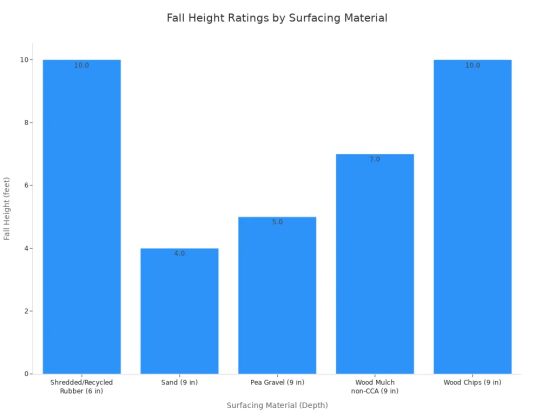
Match the rating to your highest deck. A surface rated below your fall height fails the safety check, no matter how good the commercial playground looks. A cheap surface that fails the drop test costs more later in claims and replacements. Check current test reports for every commercial playground equipment package you consider. Make sure the materials and components meet the durability targets you set before you sign.
Compliance Standards for Playground Equipment
Certifications to Confirm
Before you compare quotes, you must confirm the right standard family for your market. Each region has its own set of playground safety standards. The table below shows the main families buyers should verify.
| Region | Standards family |
| United States | ASTM International (ASTM F1487, ASTM F1918 for soft-contained play) |
| Europe | EN 1176 and EN 1177 |
| Canada | CSA Z614 |
| Australia | AS 4685 and AS/NZS 4422 |
| New Zealand | NZS references within the AS/NZS family |
Ask for the standard, the edition, the product scope, and the testing organization behind each claim, as Creative Systems advises. Keep a manufacturer’s own testing separate from independent lab reports and third-party certification. A membership badge is not a certificate. Vasia playground products are designed to comply with these international standards, and the company states this openly on its product pages.
Reading Test Reports
A certificate only counts when its scope matches the equipment you will receive. Check the manufacturer name, the model or project reference, the test standard and edition, the laboratory, and the test date. A report for a small soft-play module may not cover a multi-level structure, a climbing wall, or a trampoline court.
Know what document you hold. A factory declaration, a lab test report, and a certificate of conformity are three different things. A certificate of conformity does not replace engineering evidence or installation checks. Compare document revision numbers against your final quotation and approved design. Any change to platform height, padding, or anchoring should trigger a fresh technical review. This step protects your commercial playground equipment safety and your investment.
Specs by Component and Budget Fit
Decks, Posts, Slides, and Frames
Every part of a play structure holds its own weight, so each part needs its own spec. Galvanized or powder-coated steel posts and support frames hold the most weight and keep the structure strong. Aluminum frames work well at coastal sites, where salt and moisture attack steel faster. Rotationally molded polyethylene makes slides, tunnels, and panels as seamless, thick-walled parts that resist cracking at the seams. Decks and slides use plastic or coated metal, because bare metal can get hot enough in direct sunlight to cause contact burns. Wood brings natural beauty, yet it can splinter, crack, or rot without sealing on schedule. Rope and textiles form net climbers and cable walks, and these parts flex under load.
ASTM F1487 and the Consumer Product Safety Commission (CPSC) Public Playground Safety Handbook together set the safety standards for public play equipment. They cover entrapment openings, which must measure under 3.5 inches or over 9 inches, and the 6 ft use zone that gives a child a safe landing area around stationary equipment.
Match every part to its job. Plastic and coated metal handle weather with the least work. Wood needs the most care. Footings poured to spec and surfacing installed at the right depth protect longevity, since no maintenance schedule recovers a structure anchored incorrectly on day one.
Upfront Cost vs. Lifecycle Value
Price is not cost. May Recreation reports that the upfront equipment purchase price typically accounts for only 40 to 60 percent of your initial budget. Site preparation, installation, surfacing, inspections, and long-term care make up the rest. Higher-grade materials may raise upfront costs, yet they reduce long-term maintenance and replacement expenses. A well-protected steel structure may serve 15–20 years or longer under suitable conditions, according to Qitele. That durability turns material selection into a lifecycle decision.
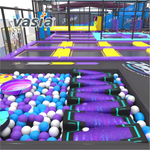
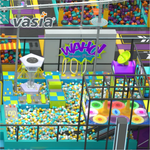
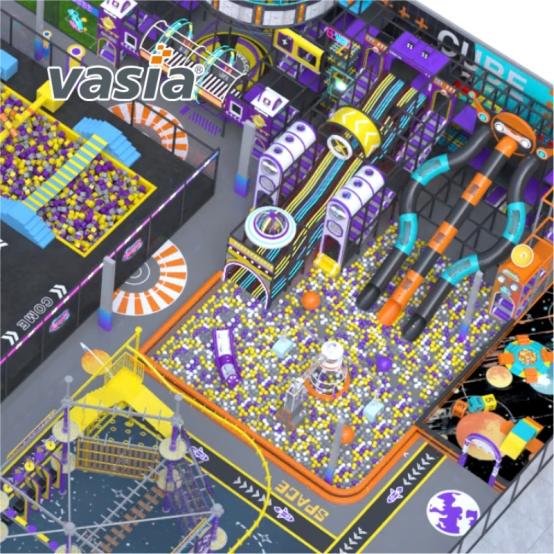
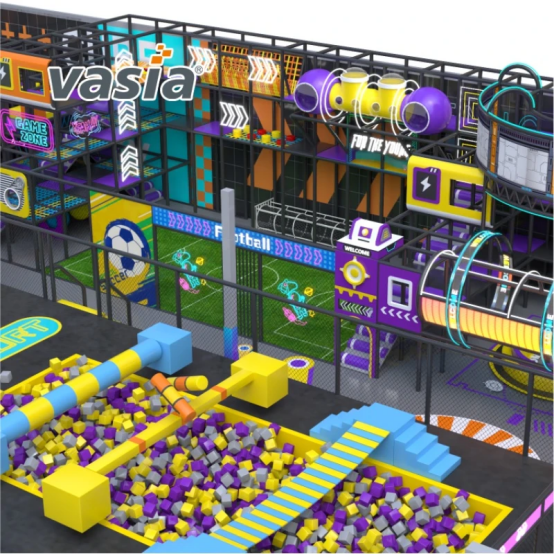
Plan the ongoing spend. AAA State of Play puts routine maintenance at 1% to 3% of installed cost per year. Surfacing wears faster than anything else, so it becomes the biggest recurring expense. Compare commercial playground equipment quotes on total value, not sticker price. Vasia Indoor Playground shows how to match materials to indoor commercial use, with slides, soft play, trampolines, rope and ninja courses built from specified components and finishes. Review each specification with care, and your commercial playground will reward the investment.
Questions for a Commercial Playground Equipment Manufacturer
Spec Sheet and Warranty Questions
Ask clear questions about materials, treatment, hardware, and warranty terms. A good commercial playground equipment manufacturer puts every answer in writing. Start with these points:
- Which metal, coating process, and rust protection do you use on structural parts?
- Which plastic type is in each component, and why did you pick it?
- Which safety standards apply, and can you share the test reports?
- How do I order replacement parts, and will you support this product line later?
- What does the warranty cover for each component, and what is left out?
Warranty terms back up the material story. Coverage often runs 1 to 10 years by component, with structural posts covered up to 100 years. So ask for a breakdown in writing, not just one headline number. UltraPlay publishes its own schedule, shown below.
Check exclusions against your site. MooTon Group lists normal wear, fading, vandalism, improper installation, and missed maintenance as common exclusions. A warranty may replace a part but not cover labor, freight, and reinstallation. Confirm the claim procedure and required maintenance records before you sign.
Vetting the Manufacturer
Judge material quality and transparency together. Gotcha Covered Construction advises you to verify experience, safety compliance, transparent pricing, and warranty coverage. Treat vague answers about sourcing as a red flag. Ask for recent installation photos in your country and physical samples of foam and covering. Request a complete specification package before production, including which parts of the equipment the ASTM F1918 evaluation covers.
A transparent commercial playground equipment manufacturer welcomes these questions. Vasia playground handles design through installation and invites direct spec questions. Compare commercial playground equipment quotes on quotation scope, not price alone. Whether you weigh usa-made commercial playground equipment or imports, the same checklist applies. A clear commercial playground partner will document every component, and that clarity protects your investment for years.
Your final review comes down to four actions. Verify material type and thickness. Confirm coating and hardware quality. Demand current compliance documents. Match every specification to how each component works in service. Little Tikes Commercial notes that metal playsets often outlast plastic and wood, yet rust and corrosion remain real risks.
Direct questions mark a smart buyer, not a difficult one. A transparent commercial playground equipment manufacturer welcomes them and shows third-party testing verification without hesitation. Ask any commercial playground equipment manufacturer about durability claims and usa-made commercial playground equipment. Then review each playground equipment spec sheet and commercial playground equipment quote against this checklist. Safety and long-term value depend on it.
FAQ
How thick should steel posts be on playground equipment?
Look for 10 to 14 gauge steel on commercial frames. A lower gauge number means thicker metal. Ask for wall thickness in millimeters and post diameter in writing. Thin walls bend when kids climb and swing again and again, and a bent frame makes the whole structure last less time.
What fall-height rating does my surfacing need?
Match the surfacing rating to your highest deck. ASTM F1292 sets the impact test limits. A surface rated below your fall height fails the safety check. Ask for current test reports for every playground equipment package you review, and make sure the tested depth matches your installation plan.
Which fasteners hold up best outdoors?
Stainless steel resists rust in humid and coastal air. Hot dipped galvanized hardware gives strong protection in wet weather. Tamperproof fasteners suit public sites, and locking patches stop vibration loosening. Ask which grade your supplier uses, and make sure the hardware stays reachable for inspection.
What should a warranty cover, and what does it exclude?
Coverage often runs 1 to 10 years by component, with structural posts covered longer. Common exclusions include normal wear, fading, vandalism, improper installation, and missed maintenance. Ask for a written breakdown by component. Confirm the claim procedure and required maintenance records before you sign.
How long does well-specified playground equipment last?
A well-protected steel structure may serve 15 to 20 years or longer under suitable conditions. Routine maintenance runs about 1% to 3% of installed cost per year. Surfacing wears fastest, so it becomes the biggest recurring expense. Compare quotes on lifecycle value, not sticker price, whether you choose usa-made commercial playground equipment or imports.